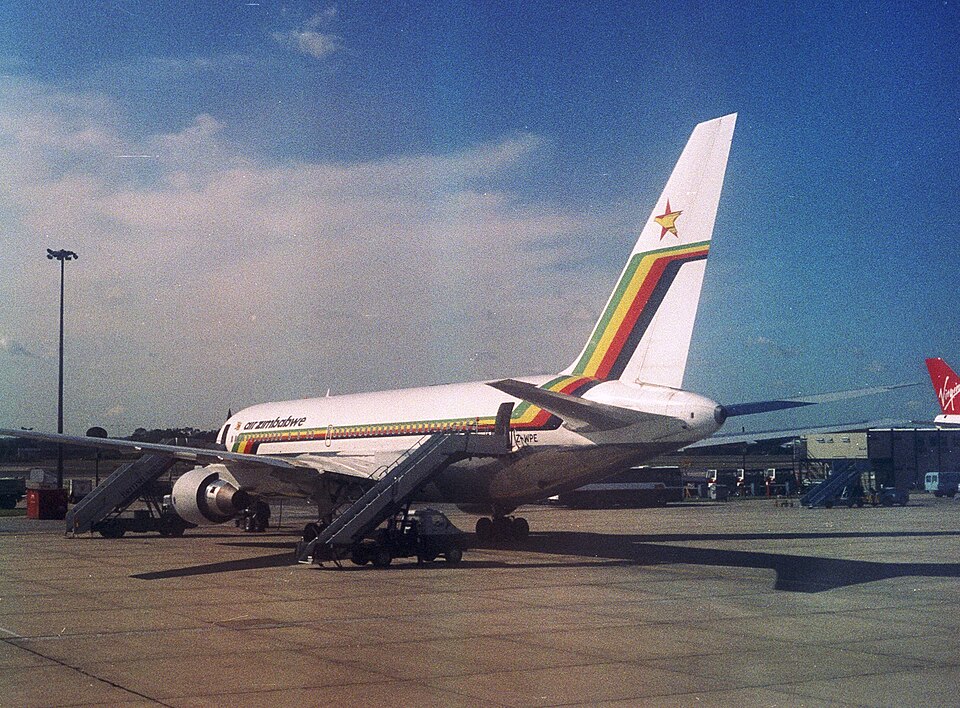
Incident Overview
On 3 August 2008 at 1850 UTC, a Boeing 767-200 registration Z-WPE experienced the separation of its right overwing escape slide while on final approach to London Gatwick Airport. The aircraft was operating a commercial passenger flight from Harare. On board were 10 crew and 206 passengers; no injuries were reported.
Flight Sequence
During the approach, when the crew selected flaps to 15°, they noted an unusual roll motion, which quickly stabilized. The approach and subsequent landing were completed normally. After the flight, during an external inspection, the crew discovered that the compartment for the right overwing escape slide was open and the slide was missing. The actuating mechanism was observed hanging from the compartment, having caused minor dents and a skin perforation on the fuselage aft of the right wing trailing edge.
Subsequent Findings
A few days later, a deflated overwing slide was found under the approach path to Gatwick and traced to Z-WPE. By then, the aircraft had been repaired and flown several sectors. The repair had been performed without a detailed inspection to determine the cause of the compartment opening.
Investigation
The UK AAIB conducted a limited investigation, with assistance from Boeing. It was established that the latch and door opening actuators had not fired, and the overwing escape hatch remained securely latched. The inflation cylinder had discharged as the slide exited the compartment. Boeing noted that the most recent maintenance input on the slide system had been on 7 July 2008, after which the compartment door had been closed and latched.
Boeing identified two broad categories of previous overwing slide detachments: 'in-compartment inflation' (where the slide inflates while the compartment is closed, forcing the door open) and a category involving incomplete latching, often with misrigging or worn components. The occurrence with Z-WPE was likely in the latter category.