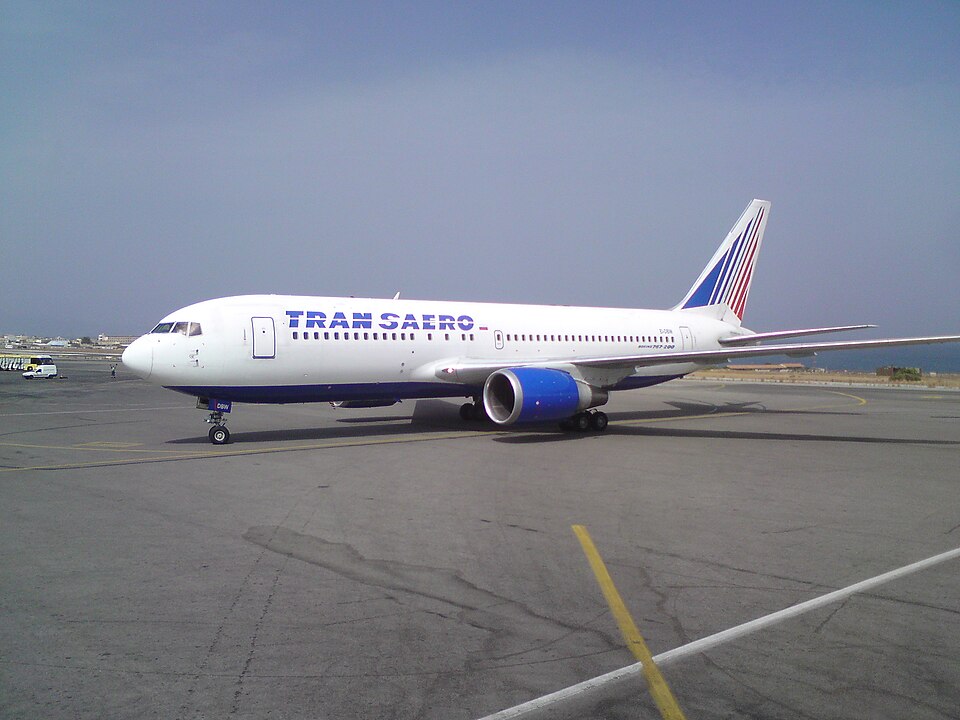
Incident Overview
On 12 April 2005, a Boeing 767-200 (registration EI-DBW) operating a scheduled passenger flight from Moscow to London Gatwick was involved in a ground incident during parking. The aircraft had 10 crew and 224 passengers on board; no injuries were reported. Damage occurred to the left wing leading edge and the motorised passenger steps.
Sequence of Events
The aircraft was assigned to Stand 32M at Gatwick's South Terminal, which comprises three parking positions: 32L, 32M, and 32R. Prior to arrival, a set of motorised passenger steps had been positioned in the inter stand clearway to the left of Stand 32, leaving sufficient clearance for the aircraft to taxi onto Stand 32M. The steps driver also noted that the parking aids were set for Stand 32M.
Upon arrival, ground staff observed the aircraft turn onto Stand 32L instead of Stand 32M. A member of the ground support staff then switched the parking aids from Stand 32M to Stand 32L, believing they had been initially set incorrectly. As the aircraft approached Stand 32L, its left wing overhung the inter stand clearway where the steps were parked. The steps driver realised the aircraft was approaching the wrong stand, moved away from the steps, and attempted to attract the pilot's attention, but was unsuccessful. The pilot continued parking, guided by the parking aids now set for 32L. The left wing leading edge subsequently contacted the handrail of the motorised steps.
Aftermath
Each parking stand features a stop button that allows ground staff to signal the flight crew to stop immediately. During the incident, the stop button was not used at any point. Following the incident, the ground handling agent issued a notice to all staff regarding the use of the stop button.