Flight History
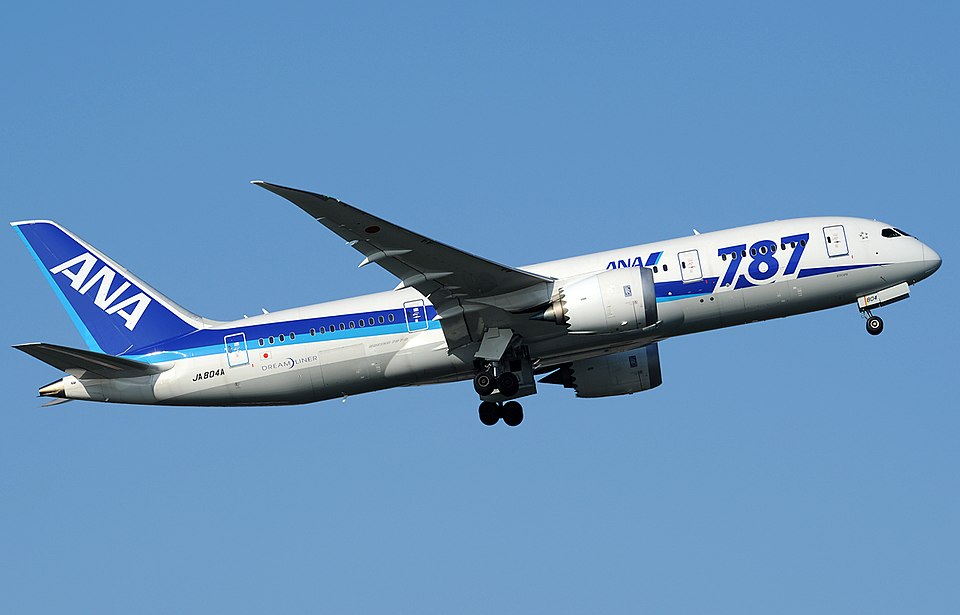
On January 16, 2013, a Boeing 787-8 operated by All Nippon Airways, registration JA804A, departed Yamaguchi Ube Airport at 08:11 local time as scheduled flight 692 to Tokyo International Airport. While climbing through 32,000 ft over Shikoku Island, the flight crew received an EICAS message indicating a battery failure at 08:27, accompanied by an unusual smell in the cockpit. The aircraft diverted to Takamatsu Airport and landed at 08:47.
Emergency Evacuation
An emergency evacuation was initiated using slides on taxiway T4 at 08:49. There were 137 occupants on board: the captain, seven crewmembers, and 129 passengers. During the evacuation, four passengers sustained minor injuries. The main battery was damaged but did not result in a fire.
Probable Cause
The probable cause of the serious incident was the main battery thermal runaway during takeoff climb, which led to an emergency landing and subsequent evacuation. Internal heat generation in cell 6 very likely caused venting, making it the initiating cell. This resulted in cell-to-cell propagation and failure of the main battery. It is very likely that cell 6 internal heat generation and increased internal pressure caused it to swell, melt surrounding insulation, and contact the brace bar, creating a grounding path that allowed high currents to flow through the battery box. The currents generated arcing inside the battery, contributing to cell-to-cell propagation and destruction of the battery. Cell 6 heat generation was probably caused by an internal short circuit, but the conclusive mechanism was not identified. Possible contributing factors included inappropriate simulation of the on-board configuration during developmental testing and underestimation of internal short circuit effects.
Safety Recommendations
The Japan Transport Safety Board issued safety recommendations to the Federal Aviation Administration, including performing equipment tests simulating actual flight operations, reviewing technical standards for lithium ion batteries to ensure appropriate simulation of electrical environment, reviewing the battery failure rate estimated during 787 type certification, reviewing the type certificate for heat propagation risk, and assessing the impact of contactor opening after cell venting on flight operations. Additionally, the FAA was recommended to supervise Boeing to continue studying internal short circuit mechanisms, improve lithium ion battery quality and reliability, and address battery charger unit and contactor operations outside the design envelope.