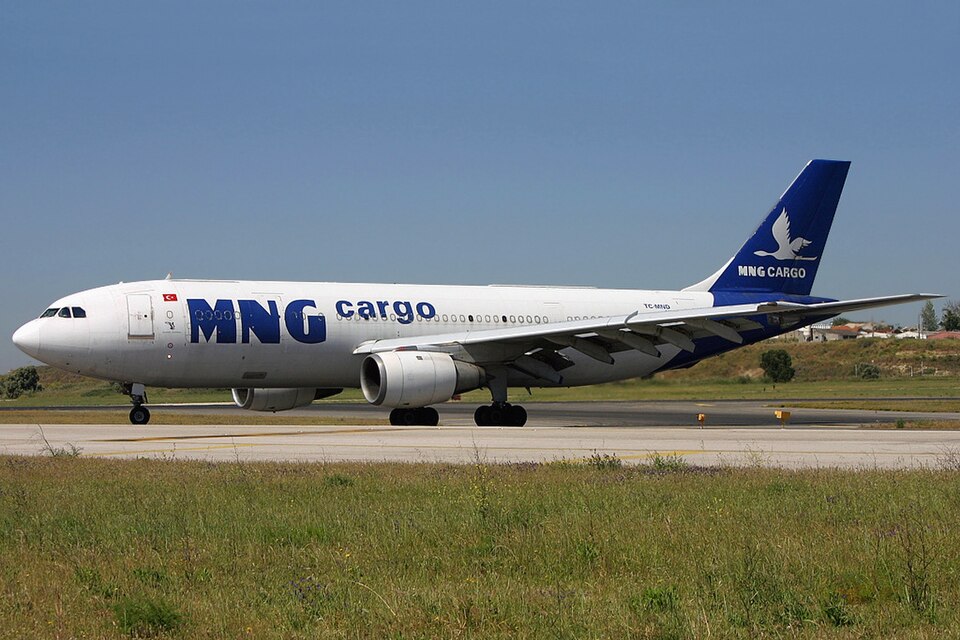
Incident Overview
On 13 April 2007 at 2314 UTC, an Airbus A300 B4 (registration TC-MND) operated a commercial cargo flight into Manchester Airport. The three crew members were conducting a VOR/DME approach to Runway 24L. The commander, aged 54, held an Airline Transport Pilot's Licence and had 17,640 total flying hours, including 7,800 on type.
Approach and Deviation
The aircraft was cleared to descend in accordance with the Manchester VOR/DME approach procedure. The co-pilot contacted the Tower frequency at about 10 nm from touchdown. The commander calculated the Visual Descent Point and began descent at 6 nm. However, radar recordings showed the aircraft was north of the published approach track. At 5 nm from the threshold, the Tower controller observed the aircraft appeared low and instructed a go-around. The aircraft stopped descending, and shortly after the crew reported the runway in sight. The controller then asked if they could continue visually; the commander replied affirmatively and the aircraft landed without further incident.
Altitude and Track Errors
According to the published procedure, the aircraft was required to maintain 2,400 ft until passing the Final Approach Fix (FAF) at 6 nm from the MCT VOR. The minimum altitude until passing the Step Down Fix (SDF) at 5 nm was 2,080 ft. Radar data indicated the aircraft descended below 2,400 ft before passing the FAF and below 2,080 ft before the SDF. At 5 nm, the aircraft altitude was 1,300 ft, compared to the recommended 2,080 ft. The track error was about 0.5 nm north of the published track at 5 nm, equivalent to a 5.7° error, which was within the VOR accuracy tolerance of ±7.8° as per PANS-OPS.
Meteorological and Aerodrome Conditions
The weather at 2250 UTC was wind 2 kt variable, visibility 4,800 m in haze, temperature 10°C, and QNH 1022 mb. Manchester Airport has two parallel runways (24L and 24R). The VOR/DME procedure for Runway 24L was published in the UK AIP; the crew used a commercially available chart with equivalent information.
Recorded Information
Due to a delay in notification, the AAIB could not recover cockpit voice or flight data recorder information. Radar recordings provided position and altitude data. The altitude reported by the transponder was to the nearest 100 feet. The aircraft's descent profile deviated from the recommended profile shown on the approach chart.
Approach Techniques
The bulletin notes that a stabilised approach technique is generally preferred over a stepped descent. The UK AIP and charts provide information for determining the appropriate vertical profile. ICAO PANS-OPS encourages operators to use a stabilised approach for non-precision approaches.
Conclusion
The radar record showed the aircraft was north of the published approach track but within the prescribed final approach segment as defined by PANS-OPS. Nevertheless, the aircraft commenced its descent before the FAF and, at the SDF 5 nm from the MCT VOR, was below the minimum altitude required.