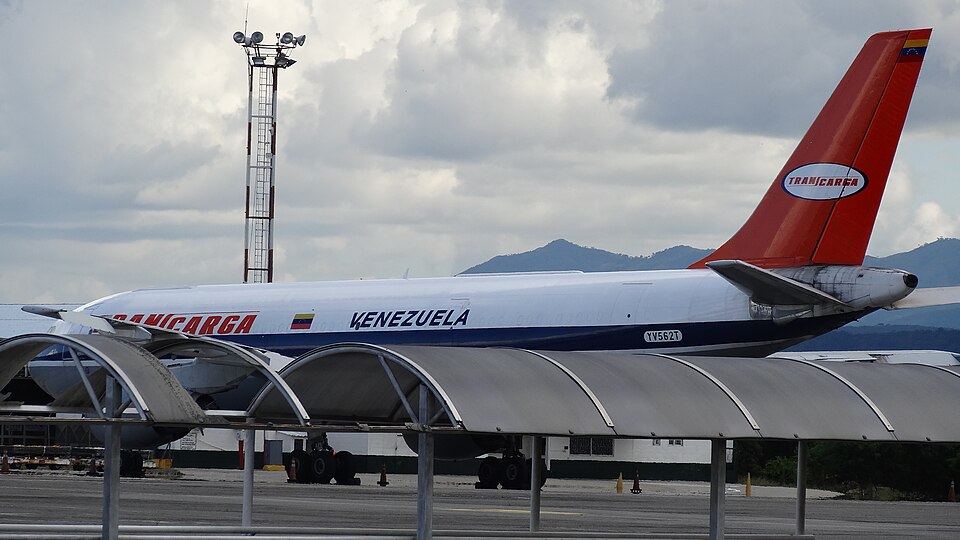
On April 8, 2021, an AIRBUS A300-B4-203 (registration YV562T) operated by TRANSCARGA INTL AIRWAYS, C.A. was involved in an aviation accident near En ruta SVMI- SKBO, VE. Investigators recorded the probable cause as: Malfunction of the electrovalve that activates the landing gear retraction and extension system, caused by the failure of the extension solenoid due to sulfation of the electrical connector that powers it. This summary draws on records from the Venezuelan Civil Aviation Accident Investigation Board (JIAAC Venezuela); 8 related events involving the same aircraft type or operator are linked below.
On April 8, 2021, an Airbus A300-B4-203 (YV562T) operated by Transcarga Intl Airways experienced a landing gear extension failure during approach to Maiquetía. The crew used a gravity extension procedure, and the aircraft landed safely with no injuries or damage.
Incident Overview and Flight Details On April 8, 2021, at 07:30 UTC, an Airbus A300-B4-203 with registration YV562T and serial number 274, operated by Transcarga Intl Airways, C.A., was on a cargo flight from Simón Bolívar International Airport (SVMI) in Maiquetía, Venezuela, to El Dorado International Airport (SKBO) in Bogotá, Colombia. The aircraft carried six people on board, 38,400 pounds of fuel, and had an estimated en-route time of 1 hour and 30 minutes. ## Event Sequence The flight proceeded normally for approximately 2 hours and 6 minutes until 07:04 UTC, when the aircraft was in final approach. The crew attempted to extend the landing gear, but it did not deploy. After several unsuccessful attempts, the crew coordinated with air traffic control to head north of the station to perform checklist and verification procedures. When these efforts failed, the crew executed the manual procedure from the Quick Reference Handbook (QRH) to extend the landing gear by gravity. Upon receiving the indication that the gear was secured, the crew informed the control tower that the issue was resolved but noted that the nose wheel steering system would be inoperative, as warned in the QRH. At 07:30 UTC, the aircraft was authorized to land and touched down normally. After the landing roll, the aircraft stopped at the end of runway 10/28 due to the inoperative nose wheel steering. It was then towed to a remote platform at SVMI. All occupants were unharmed, and the aircraft sustained no damage. ## Aircraft and Maintenance Information The aircraft is a wide-body, twin-engine transport category aircraft configured for cargo, with a maximum capacity of 9 occupants including the flight crew. It is powered by two General Electric CF6-50C2 turbofan engines (ESN LH 455751 and ESN RH 455822) and has a maximum fuel capacity of 106,896 pounds and a maximum takeoff weight of 363,000 pounds. The last preventive and scheduled maintenance was performed by OMAC N°536, Transcarga Intl Airways, C.A., located at General José Antonio Anzoátegui International Airport in Barcelona, Venezuela. ## Crew and Weather Conditions The pilot in command held a valid medical certificate and airline transport pilot license (No. 12,461,680) issued by the Instituto Nacional de Aeronáutica Civil (INAC), with 2,400 hours as pilot in command on the A300 and 13,615 total hours. The first officer held a valid commercial pilot license (No. 20,190,889) with 600 hours as co-pilot on the A300 and 1,570 total hours. Weather conditions at 07:30 UTC on April 8, 2021, were favorable for flight operations, with winds from 080° at 6 knots, unlimited horizontal visibility, and a QNH of 1014. The investigation determined that weather was not a contributing factor to the incident. ## Investigation and Probable Cause The investigation included interviews with the crew, collection of documentation from the operator and maintenance organization, and an inspection to validate corrective maintenance actions related to a reported landing gear failure. The inspection involved checking the 3GA electrovalve of the landing gear system according to maintenance manual procedures and recording video evidence of the steering and gear retraction/deployment systems. The probable cause was identified as a malfunction of the electrovalve that activates the landing gear retraction and extension system, resulting from the failure of the extension solenoid due to sulfation of the electrical connector that powers it.