History of the Flight
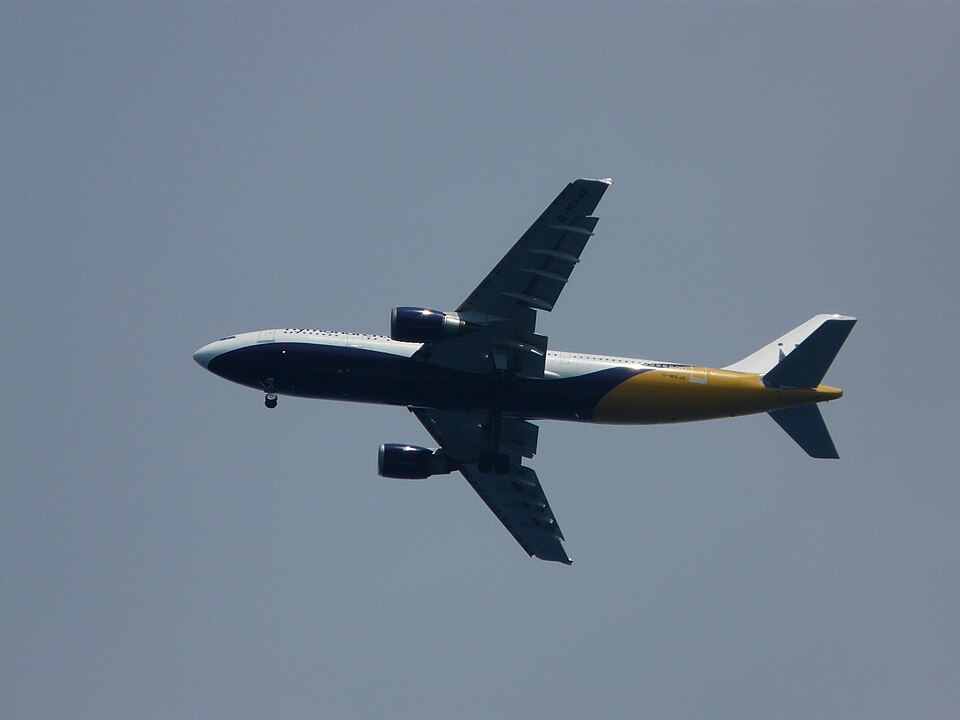
On 26 July 2011, an Airbus A300B4-605R, registration G-MAJS, operated a scheduled passenger flight from London Gatwick Airport to Chania Airport, Crete. The aircraft had two General Electric CF6-80C2A5 turbofan engines and was manufactured in 1991. The crew consisted of 12 members and there were 335 passengers on board. No injuries were reported and the aircraft sustained no damage.
The commander, aged 49, held an Airline Transport Pilot's Licence and had 12,074 total flying hours, including 8,680 hours on type. The flight was the first of the day for both pilots.
Fault Finding Procedure
After engine start, when the co-pilot selected the slats/flaps lever to 15/15, slat system 1 and 2 fault indications appeared on the Electronic Centralized Aircraft Monitor. The pilots performed a system reset in accordance with the Quick Reference Handbook (QRH), which was unsuccessful. They then contacted the operator's engineers by radio. The engineers advised that several resets might be required, involving tripping and resetting circuit breakers and moving the slats/flaps lever to check operation.
During this process, the commander liaised with engineers and operated circuit breakers, while the co-pilot, in contact with ATC, operated the slats/flaps lever under the commander's direction. The fault cleared after the co-pilot cycled the lever between 0/0 and 15/15 approximately six times. The commander confirmed serviceability with engineers, reviewed the flight plan and fuel, and discussed with the co-pilot the possibility of the fault recurring on takeoff, reviewing the appropriate procedure which included cycling the slats/flaps lever.
The Incident
The takeoff from Runway 08R commenced at 1033 UTC and was normal until shortly after becoming airborne. The co-pilot called "Positive climb" and the commander, who was pilot flying, called "Gear up". At that point, the co-pilot moved the slats/flaps lever to 0/0 instead of selecting the landing gear lever.
The commander noticed unexpected displays on the airspeed indicator and initially suspected an airspeed indication problem. He cross-checked with the standby airspeed indicator and confirmed the aircraft was at the correct pitch attitude and power setting for the 'Unreliable Airspeed' procedure. He then noticed the landing gear selector was still down and repeated the "Gear up" call. The co-pilot informed the commander that he had inadvertently retracted the slats and then selected the landing gear lever up.
The stall warning system activated twice during the following 10 seconds; each time, the commander reduced pitch attitude. The aircraft maintained a positive rate of climb and accelerated to normal climb speed. The flight proceeded without further incident.
Recorded Flight Data
Recorded data showed that the co-pilot operated the slat/flap lever about eight seconds after takeoff, when the true angle of attack (TAOA) was 5.6° and the aircraft was climbing through 280 ft above ground level. Over the next three seconds, TAOA increased to approximately 8° and remained above 7.5° for 18 seconds while the slats and flaps fully retracted. Airspeed decayed from 176 KCAS to 166 KCAS over 12 seconds before increasing.
Slat Alpha-Lock System
The aircraft was equipped with slat alpha-lock protection, described in the Flight Crew Operations Manual (FCOM) as preventing slat retraction when angle of attack is above 7.5° by limiting retraction to 15°. However, the FCOM states that slats will retract if AOA is below 7.5° when selected, and the manufacturer noted that the alpha-lock does not stop retraction once it has started. On this flight, the system worked as designed.
Human Factors
The co-pilot had operated the slats/flaps lever during the fault-finding process, selecting 0/0 directly from 15/15, unlike normal in-flight procedure which involves a stop at 15/0. This developed a new motor skill, negating the blocking baulk at 15/0. The distraction of the slat problem and preoccupation with a possible recurrence on departure mentally predisposed him to retract the slats instead of raising the landing gear.
Conclusion
On the ground before the incident, the co-pilot had developed and exercised a motor skill to operate the slats/flap lever between 15/15 and 0/0 in one movement. The distraction of the slat problem and the preoccupation with the possibility of a slat malfunction on departure had mentally predisposed him to exercise the wrong motor skill and to retract the slats and flaps despite his intention to operate the landing gear lever.