Synopsis
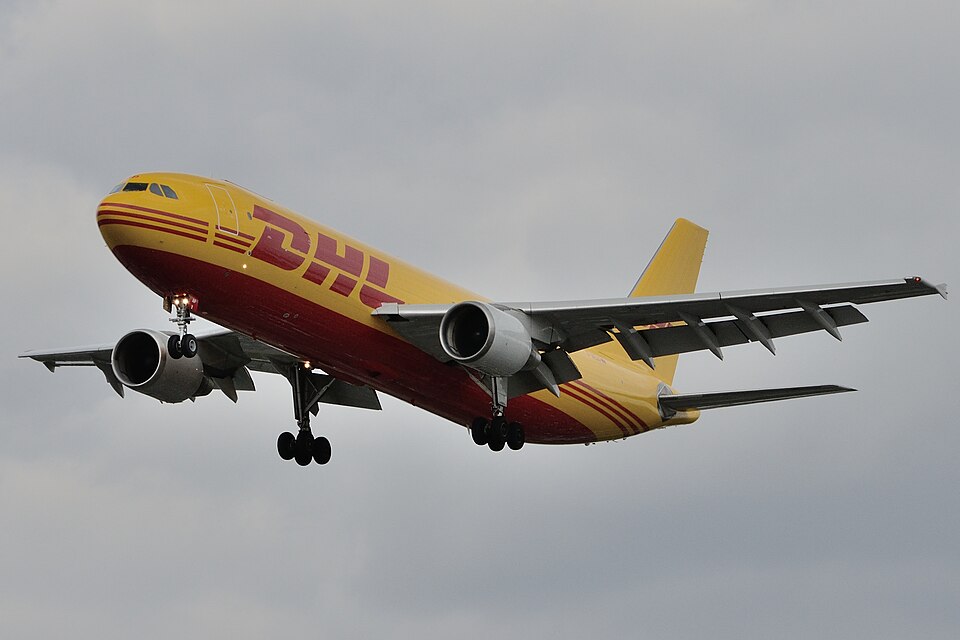
On 14 April 2012, an Airbus A300B4-622R(F) freighter, registration D-AEAP, was departing East Midlands Airport for Paris Charles De Gaulle Airport on a scheduled cargo flight. During pushback from Stand 102, after both engines were started and the towbar was disconnected, the aircraft taxied forward into the tug before the ground crew had signalled that they and the tug were clear. There were no injuries to the two ground crew or the three aircrew, but the aircraft's nose landing gear and the tug sustained damage.
History of the Flight
The flight was conducted as a training flight with a captain-under-training acting as Pilot Flying (PF) in the left seat, and a training captain as commander in the right seat (PNF). A loadmaster was also onboard. At 1744 hrs, the commander requested start and pushback clearance from ATC. After obtaining clearance, the PF contacted the ground crew headset operator via interphone. Pushback commenced at 1747 hrs, during which the crew started the No 2 engine. When pushback was complete, the parking brake was set, and the No 1 engine was started. The PF then instructed the headset operator to disconnect the tug and that he would look for hand signals on the left side of the aircraft.
Ground Crew and Equipment
The headset operator, relatively new to the role, attempted to remove the towbar pin but struggled. He sought assistance from the tug driver; together they removed the pin and disconnected the towbar from the tug. The headset operator then disconnected the towbar from the aircraft and turned to push it to an area forward of the aircraft to reconnect it to the tug. Meanwhile, the PF completed the After Start scan with some intervention from the PNF, called for the After Start checklist, and then asked for taxi clearance. At 1753 hrs, ATC cleared the aircraft to taxi to the Golf 1 holding point for Runway 09. The PF switched on the taxi light and increased power.
As the headset operator moved the towbar, he felt the aircraft above him, pushed himself clear, and watched the aircraft strike the tug and stop. He then informed the flight crew via interphone that he was still connected. The tug driver attempted to drive clear but could not avoid the collision. The aircraft struck the rear left side of the tug, pushing it a short distance. The aircraft had moved about 8 metres before stopping. Engines were shut down at 1754 hrs. The Airport Fire and Rescue Service attended, and the incident was upgraded to an accident at 1818 hrs.
Damage to the Aircraft and Tug
The aircraft's nose landing gear drag strut was damaged, and one drag strut attachment pin sheared. Damage also occurred to the left steering actuator and nose landing gear doors. Both nosewheels were replaced. The tug sustained damage to its bodywork, which was subsequently repaired.
Recorded Information
The flight data recorder (FDR) and cockpit voice recorder (CVR) were downloaded. Closed-circuit television (CCTV) captured the pushback, tug movements, and collision. FDR data showed longitudinal acceleration, allowing calculation of groundspeed at collision (2.4 m/s or 4.7 kt) and distance travelled (8 m). Engine parameters were sampled every four seconds; brake usage was not recorded.
Visibility from Flight Deck
From the pilot's seat, a 1.8 m high object (the height of the tug) becomes visible when approximately 14 m in front of the aircraft. Analysis of CCTV, flight data, and field of view indicated that the tug and ground crew were likely not visible to the pilots when the aircraft started to taxi.
Organisational and Management Information
The operator's operations manual included a check for a hand signal from ground crew as the final item of the After Start procedure, but the After Start checklist did not contain an item to verify receipt of the hand signal. Some operators have SOPs requiring both pilots to see the hand signal before taxi, or including 'ground crew clear' on the checklist.
Discussion
The pushback proceeded normally until the headset operator had difficulty removing the towbar pin, causing a delay. The PF carried out the After Start scan, which took extra time due to corrections from the PNF, potentially causing a distraction. The PF then called for the After Start checklist and taxi clearance, omitting the check for a hand signal. The final safety element relied on the flight crew observing a hand signal before taxi; this was not performed. The safe completion of pushback depends on SOPs ensuring both flight and ground crews confirm clearance. The operator has since revised its After Start checklist to include 'HAND SIGNAL ......... RECEIVED' as the final check.