Incident
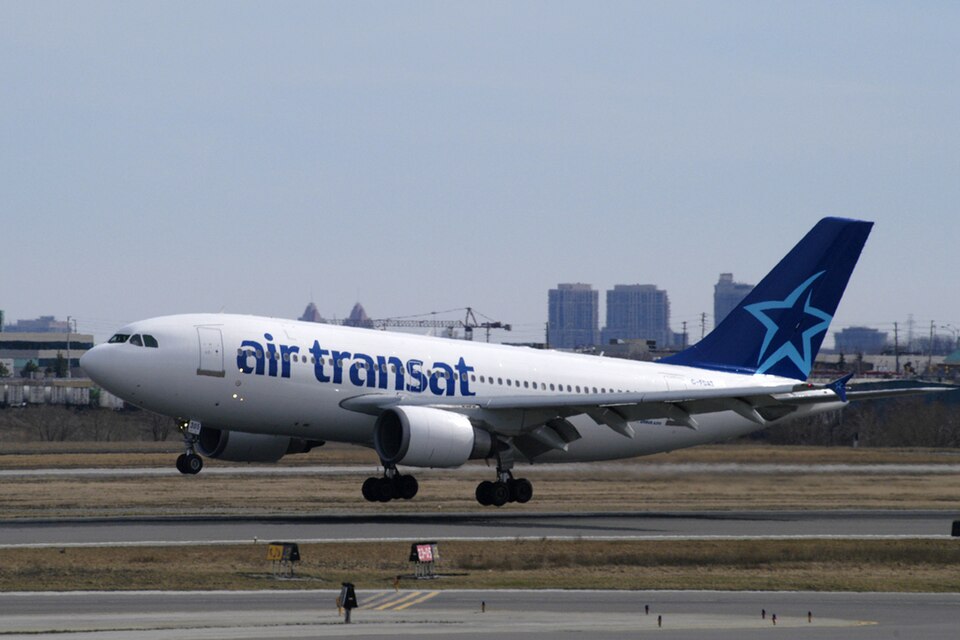
On 15 July 2003, an Airbus A310-308 (registration C-FDAT) operating a public transport passenger flight from Toronto, Canada, was involved in a ground incident at Stand 6, Manchester Airport. The aircraft's left engine cowling made contact with the underside of the airbridge, resulting in considerable damage to the cowling over a length of approximately 1.5 meters. No injuries were reported among the 9 crew members and 255 passengers on board.
Sequence of Events
The airbridge at Stand 6 had been vacated by a Boeing 757 at 0648 hrs, seven minutes before the incident. When the airbridge was retracted, a fault prevented it from being moved into the correct parking position, leaving the head of the airbridge displaced 4.1 meters towards the rear of the stand, creating a potential obstruction. The airbridge operator attempted to report the fault to Terminal Control but the telephone number was engaged; he then left to inform his supervisor.
Meanwhile, an Airfield Safety Officer (ASO) was requested to marshal the arriving A310. En route to Stand 6, the ASO intervened in an unrelated safety matter involving passengers on the apron. He arrived at Stand 6 as the aircraft was already turning onto the stand.
The aircraft commander had observed that the Stand Entry Docking Guidance (SEDG) lights were illuminated and followed them onto the stand. The ASO commenced marshalling signals, and the commander monitored both the marshaller and the SEDG. The marshaller then noticed that the airbridge was not in its normal parking position—it was extended and aligned with the left engine. He signaled the aircraft to stop, but the engine cowling struck the airbridge before the aircraft halted. The commander did not feel or hear any indication of the contact. The aircraft stopped 2.8 meters short of the normal parking position.
Airport Procedures and SEDG System
At Manchester Airport, SEDG systems are used to guide aircraft to parking positions. Stand 6 was equipped with centerline guidance (AGNIS) and stopping position guidance (PAPA). The SEDG was activated from Apron Control when the stand was allocated, irrespective of whether a marshaller was assigned. The 'STOP SHORT' illuminated sign above the stand could only be activated from Apron Control.
Stand clearance responsibilities were shared among airbridge drivers, ground engineers, and marshallers. Procedures required them to ensure the stand was clear of obstructions, including the airbridge being correctly parked. Communication between Terminal Control and Apron Control lacked a formal procedure for reporting stand obstructions; such information had to be passed directly by airbridge drivers or handling staff, who typically used telephones, while marshallers had radios.
Safety Recommendations
The investigation resulted in two safety recommendations addressing control of SEDG systems at Manchester Airport and a third recommendation to the Civil Aviation Authority proposing an expansion of the UK aerodrome audit process to include the control and use of SEDG systems.