Overview
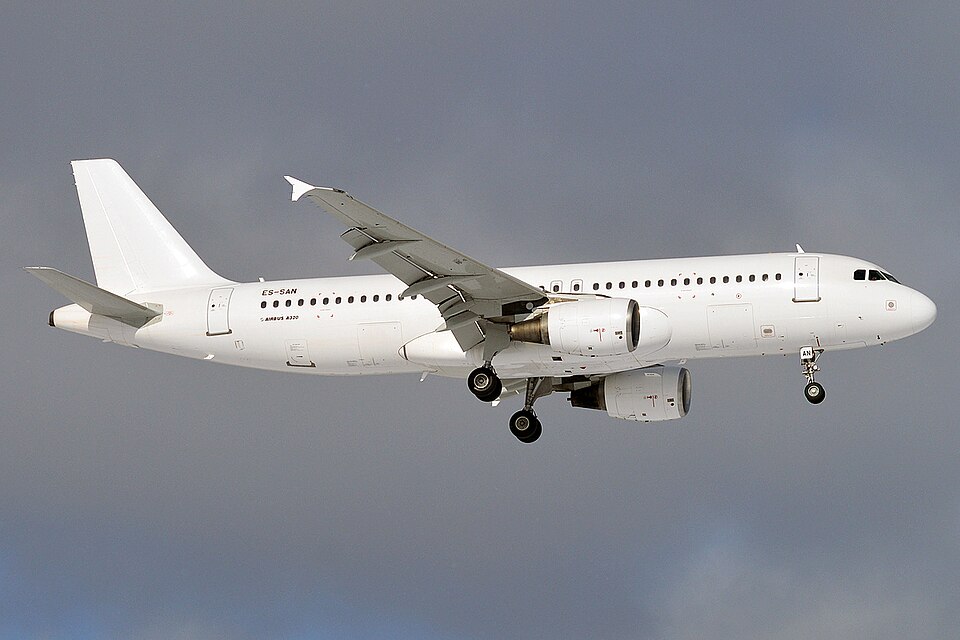
On 28 February 2018 at 10:02, a Smartlynx Airlines Estonia Airbus A320-214, registered ES-SAN, departed Tallinn Airport, Estonia, for training flights. On board were two crew members (a captain and a safety pilot), four students, and one ECAA inspector. The flight conducted several successful ILS approaches and touch-and-go cycles.
Accident Sequence
At 15:04, after a successful touchdown on the runway, the aircraft did not respond as expected to sidestick inputs when reaching rotation speed. Following a brief lift-off, the aircraft lost altitude and struck the ground near the end of the runway. During the impact, the engines contacted the runway and the landing gear doors were damaged. The aircraft then climbed to 1,590 feet above ground level and pitched down again. The pilots stabilized the flight path using manual pitch trim and engine thrust, executed a U-turn back toward the runway, and declared an emergency. During the approach, both engines lost power. The aircraft touched down 150 meters before the runway threshold at 15:11. On landing, tires burst, and the aircraft veered off the runway, coming to a stop 15 meters left of the runway.
Injuries and Damage
The safety pilot and one student sustained minor impact trauma. The aircraft's landing gear doors, landing gears, both engine nacelles, engines, and fuselage suffered severe damage, resulting in hull loss.
Probable Cause
The official findings state that the accident resulted from a combination of causal factors: an intermittent THSA override mechanism malfunction leading to loss of pitch control by both ELACs; a SEC design flaw that allowed a single event (left landing gear temporary decompression) to cause loss of pitch control by both SECs; and the training instructor's decision to continue the flight despite repetitive ELAC PITCH FAULT ECAM caution messages. Contributory factors included non-standard procedures for touch-and-go training, lack of clear operational rules for training flights, and crew coordination issues.