What happened
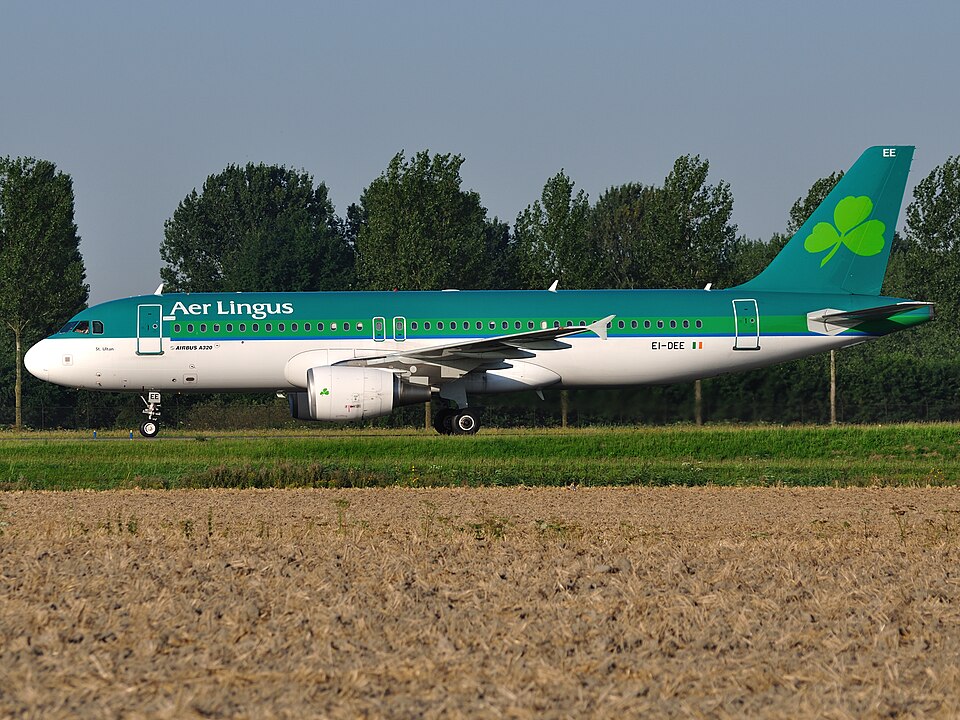
On 14 January 2025, an Airbus A320 with registration EI-DEE was conducting a commercial air transport flight from Faro to Dublin. During the descent for Runway 28 Left at Dublin Airport (EIDW), the aircraft was being flown manually by the commander. The crew requested and was granted permission to maintain high speed below Flight Level 100. As the aircraft approached the Final Approach Fix, it failed to establish on the Instrument Landing System localiser, instead paralleling the inbound course while remaining above the desired vertical profile.
The flight crew decided to abandon the approach and execute an orbit to the right to regain position. During this manoeuvre, the aircraft entered a steep descending turn where the bank angle briefly reached 44 degrees. This was followed by two instances where the airspeed dropped below the minimum selectable speed (VLS), triggering the aircraft's low-speed protection systems. The commander disengaged autothrust and selected take-off/go-around thrust to recover speed. After climbing through a cleared altitude of 3,500 feet to approximately 4,200 feet, the crew requested radar vectors for a second approach. The aircraft subsequently established on the ILS and landed uneventfully at 14:11 UTC. No injuries or damage were reported.
The investigation
The Air Accident Investigation Unit (AAIU) examined cockpit voice recorder and digital flight data recorder information, along with interviews with the flight crew. The investigation focused on the sequence of events leading to the aircraft upset, including the decision to fly manually and the management of energy during the approach. It assessed the crew's situational awareness, the use of automation, and the effectiveness of crew resource management during the orbit manoeuvre.
Findings
The AAIU determined that the probable cause was an aircraft upset occurring while seeking to expedite routing to the Final Approach Fix. Contributory factors included:
- The commander’s belief that a direct routing would allow for a stable approach, which proved incorrect.
- The decision to disconnect the autopilot and fly manually, which degraded situational awareness.
- The aircraft remaining high on the initial approach and failing to establish on the ILS.
- The flight crew not requesting extra track miles or entry into a holding fix when it became apparent the approach would be unstable.
Safety action
The operator provided simulator training to the crew involved, focusing on energy management and discontinued approaches. Additionally, the operator issued a Flight Crew Information notice highlighting the risks associated with conducting visual orbits in high or fast situations, emphasizing that such manoeuvres can further degrade situational awareness. The AAIU noted that due to these actions, no formal safety recommendations were sustained.