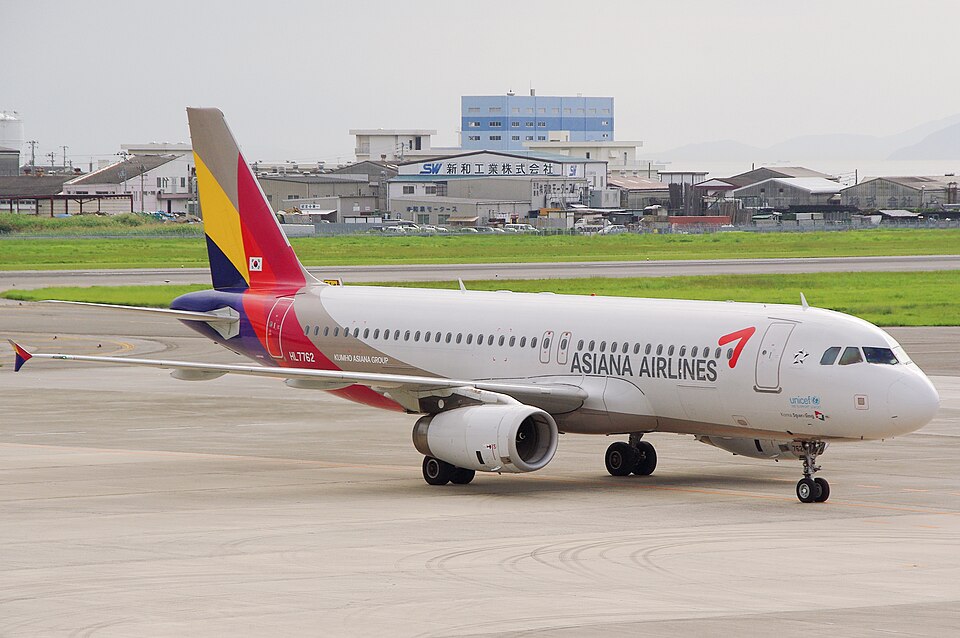
Accident Details
The approach to Hiroshima Airport was conducted in marginal weather conditions. The autopilot was disengaged at 2,100 feet MSL when the aircraft descended below the glide path. It subsequently struck approach lights and the localiser antenna located 325 meters short of runway 28. The aircraft continued descending, hitting the soft ground short of the runway. It then rolled on the runway for approximately 1,154 meters, veered left, went off the runway, and came to rest 130 meters to the left of the concrete runway, about 1,477 meters past the runway threshold.
Weather Conditions
At the time of the accident, weather conditions were difficult. Visibility was up to 4 km. Runway visual range (RVR) on runway 28 varied from 300 to 1,800 meters. Light rain and partial fog were present. Cloud cover: one octa at 0 feet, four octas at 500 feet, and six octas at 1,200 feet.
Injuries and Damage
All 82 occupants were evacuated. Among them, 27 were injured: 25 passengers and 2 crew members. The aircraft was considered written off due to severe damage to both engines, ailerons, wings, and the bottom of the fuselage.
Probable Cause
The official findings state that the aircraft undershot during the landing on runway 28, and the pilot-in-command (PIC) commenced a go-around, but the aircraft collided with aeronautical radio navigation aids in front of the runway threshold just before turning to climb. Regarding the undershoot, it is probable that the PIC continued the approach without executing a go-around while the aircraft's position could not be identified by visual references that should have been continuously in view and identified at or below the decision altitude (DA). Additionally, the first officer (FO), as the pilot-monitoring, did not call for a go-around immediately when the runway was not visible at DA. The PIC's non-compliance with regulations and standard operating procedures (SOPs) likely had a background factor of insufficient education and training for rule compliance within the company. Furthermore, the FO's failure to assert a go-around indicated that crew resource management (CRM) did not function appropriately.