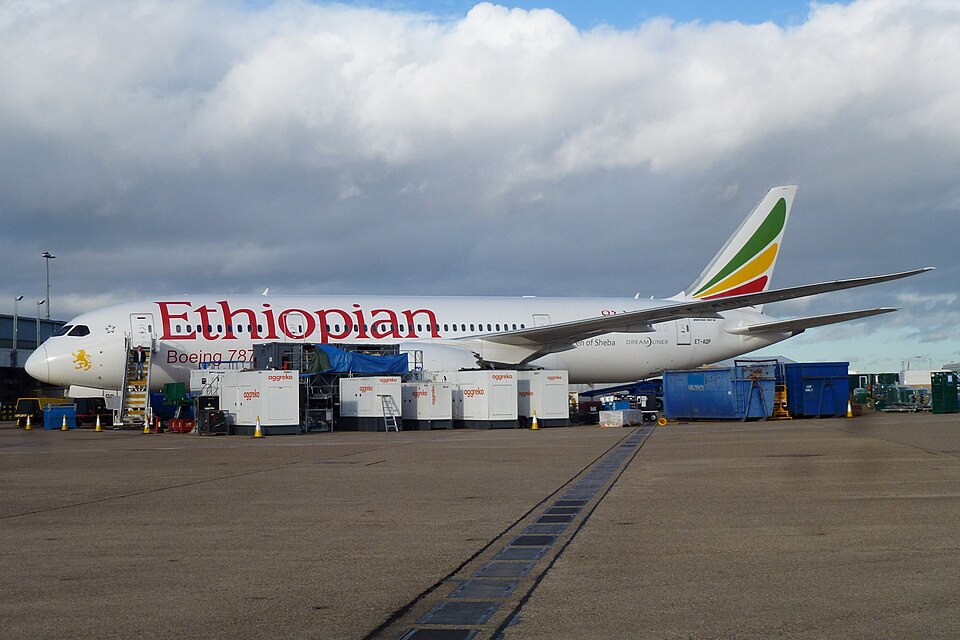
Aircraft and Event
On 12 July 2013, a Boeing B787-8, registration ET-AOP, was involved in a serious incident at London Heathrow Airport. The incident involved a fire that originated in the aircraft's Emergency Locator Transmitter (ELT) battery. No injuries were sustained.
Damage
The aircraft sustained significant fire damage. The fire propagated to the aircraft structure. The ELT and its battery were destroyed in the event.
Investigation
The Air Accidents Investigation Branch (AAIB) conducted an investigation into the serious incident. The investigation included examination of the ELT, its battery and cells, the aircraft structure, and the fire propagation. The report details the battery construction, cell failures, and structural damage. The cause of the battery fire was not explicitly stated in the published summary.
Fire and Toxicity
The fire was initially tackled by cabin and flight crew using available firefighting equipment. The Rescue and Fire Fighting Service (RFFS) also responded. Firefighting procedures and equipment were reviewed. Toxicity concerns from battery combustion were examined.
Battery and ELT Examination
The ELT and its lithium-metal battery were examined using computed tomography (CT) scans and teardown analysis. Cell internal short circuits and failure of protective devices were observed. The battery pack design and cell construction were studied.
Structural Impact
The aircraft's composite structure was examined for heat damage. Structural testing and thermal modeling were performed to assess the extent of fire damage. The aircraft sustained significant damage to surrounding structure.