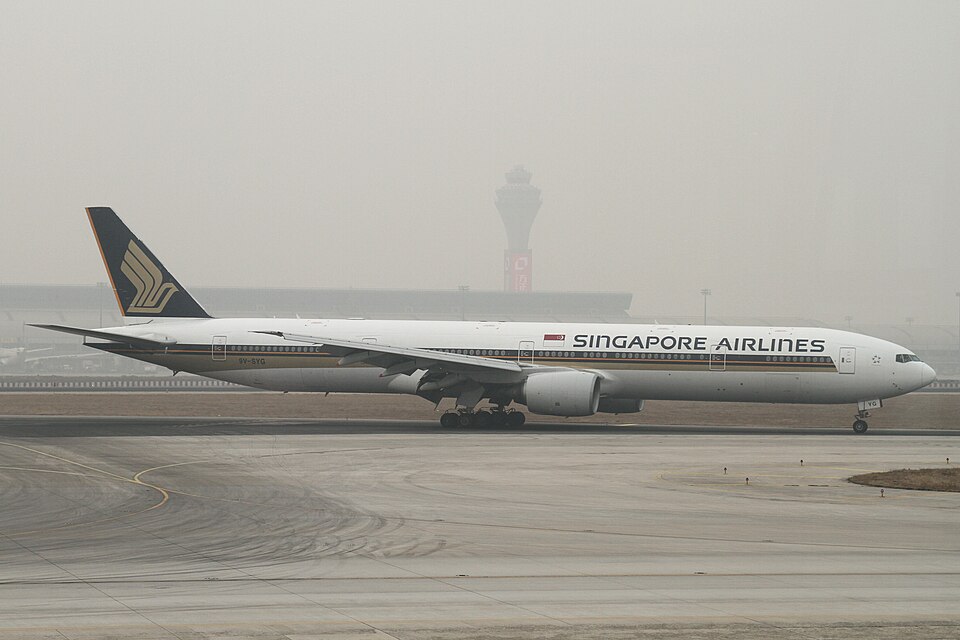
Flight Data Analysis
Analysis of the aircraft's flight data revealed multiple instances of airspeed stagnation during the takeoff sequence, from a computed airspeed of 77 kt through rotation initiation at 178 kt (Vr) and initial climb. Rotation began at a computed airspeed of 178 kt, initially at a rate of approximately 0.5 degrees per second, before increasing to about 3 to 4 degrees per second. At the start of rotation, the headwind component dropped by 12 kt, causing the computed airspeed to stagnate and then reduce to 173 kt. Lift-off occurred at a pitch attitude of 10.7 degrees. The manufacturer-specified tail skid contact attitude for the Boeing 777-300 is 8.9 degrees.
Wind and Airspeed
After reaching rotation speed (Vr), the aircraft's airspeed decreased by about 5 kt because of a reduction in headwind of approximately 12 kt.
Continued Rotation
The pilot flying (PF) reported not hearing the pilot monitoring (PM) call for speed after initiating rotation. According to the operator's Flight Crew Training Manual (FCTM), the standard procedure in the event of a speed reduction is to momentarily delay rotation. The PF noted that they considered the rotation normal given the prevailing conditions.
Tail Skid Strike
The aircraft did not become airborne at the manufacturer's expected pitch attitude of 7 degrees, prompting the PF to continue increasing the pitch attitude to 10.7 degrees, at which point lift-off was achieved. This pitch attitude exceeded the 8.9-degree threshold for a tail skid strike on the Boeing 777-300, resulting in the strike.
Guidance to Flight Crew
The operator's Flight Crew Operations Manual (FCOM) states that reduced thrust is the standard procedure for takeoff. The FCOM also lists environmental conditions where reduced thrust takeoffs are not permitted. However, the FCOM does not include direct guidance on takeoff thrust settings in gusty wind and strong crosswind conditions. The FCTM provides guidance for considering higher thrust settings and rotation speeds under such environmental conditions.