What happened
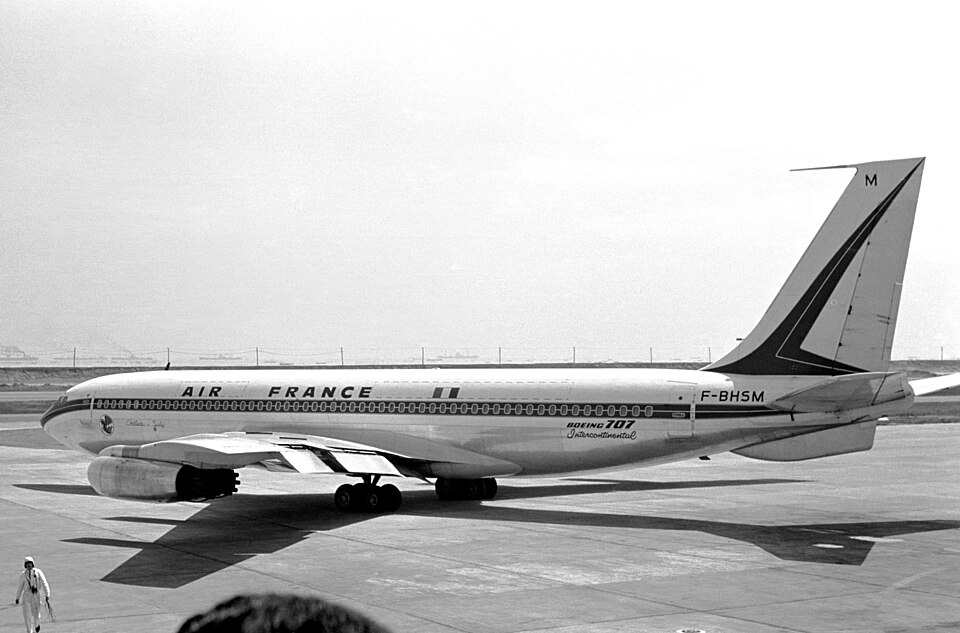
A non-scheduled international flight operated from Paris Orly to Atlanta via New York was underway when the Boeing 707, known as "Chateau de Sully", attempted a takeoff from runway 08. The flight, carrying 122 passengers and 10 crew members, began its takeoff roll at 11:32 UTC following a delay. During the initial acceleration, the aircraft maintained its centerline and reached rotation speed (VR) approximately 48 seconds into the run.
As the pilot-in-command attempted to rotate the aircraft, the nose lifted briefly before dropping back down as braking was applied. Thick smoke emerged from the wheels during the deceleration process. As the aircraft continued to brake, it began to veer left and then listed heavily toward the starboard side. The aircraft eventually exited the runway while still traveling at a high speed of 160 kt.
Upon exiting the paved surface, the uneven terrain caused the port landing gear to break away. This led to a pivot that caused engines 1 and 2 to scrape the ground, igniting a fire in the port wing. The aircraft continued past the runway end, crossing a road and striking approach lights. The structural integrity of the plane failed as it reached a steep depression near the Seine. The nose section detached upon impacting a house and garage, and the remaining fuselage came to rest 550 m beyond the runway threshold. The accident resulted in 130 fatalities and 2 injuries.
Findings
The investigation determined that the accident was caused by an unstable trim condition that placed extreme physical loads on the control column during rotation and liftoff. This issue was compounded by a malfunction in the trim servo motor control system, which prevented the pilot from correcting the stabilizer setting. These combined mechanical failures led the pilot to abort the takeoff at a point where the aircraft could no longer be stopped within the remaining runway length.