History of the Flight
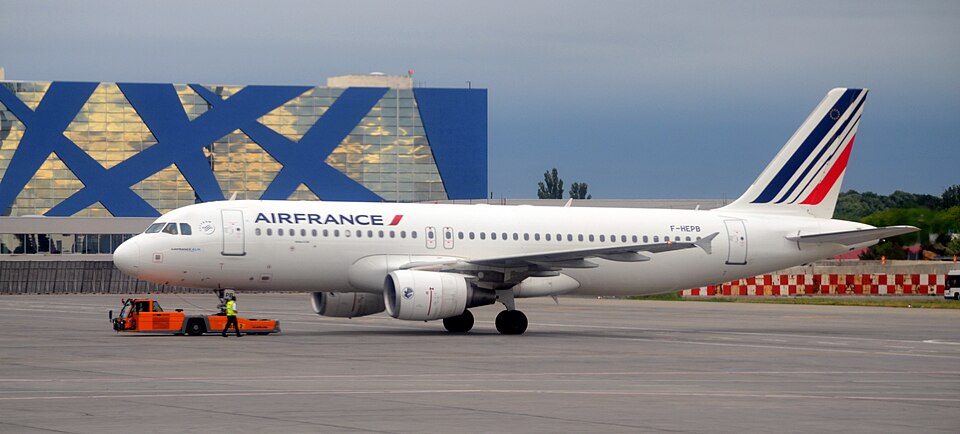
The incident involved an Airbus A320, registered F-HEPB, operated by Air France on a commercial passenger flight from Fort-de-France, Martinique, to Pointe-à-Pitre, Guadeloupe, on 11 February 2022. The crew planned to conduct either an ILS or visual approach to runway 12, conditions permitting. Upon contacting the controller at 21:36, the crew expressed a desire to land as soon as possible. The controller offered radar vectoring for an ILS approach, and the crew indicated they might request a right-hand visual approach depending on conditions. Weather information provided included visibility 4,000 m, RVR 5 km, and scattered to broken clouds at various altitudes.
At 21:43, the crew reported excellent weather and requested a visual approach. The controller cleared them for a right-hand visual approach to runway 12. The aircraft descended, and at 21:47, the pilot flying (PF) disengaged the autopilot and set thrust to idle, disconnecting the auto-thrust. The PF turned onto base leg, landing gear was extended, and flaps were gradually set. At 21:48:03, the controller cleared the aircraft to land and immediately issued a Minimum Safe Altitude Warning (MSAW) instructing the crew to check altitude. The aircraft was at 1,100 ft with a vertical speed of 1,570 ft/min. The crew read back the landing clearance. The controller repeated the terrain alert at 21:48:16. The PM announced they were checking. Vertical speed decreased from 2,060 ft/min to 750 ft/min.
At 21:48:34, the crew realized the aircraft was not aligned with the runway centerline, being 1 NM south of it, and initiated a go-around. The minimum height during the go-around was 460 ft, and minimum speed was 128 kt (approach speed 138 kt). The controller asked the crew for their position; they replied they were going around. The crew subsequently requested radar vectoring for an ILS approach and landed without further incident.
Additional Information
Aerodrome Information
Pointe-à-Pitre – Le Raizet airport has a single runway 12/30, 3,129 m long and 45 m wide. Runway 12 lacks approach or centerline lighting but is equipped with a PAPI set to 3.2°. The crew used the ILS Y approach chart; the operator did not provide a specific visual approach chart. A NOTAM indicated the runway would close at 22:15 due to work, but neither controllers nor crew reported pressure from this. Runway lighting was set to level 1, normal for night operations.
Meteorological Information
METAR reports at 21:30 and 22:00 indicated scattered cloud layers and light rain. The aircraft recorded wind from 100° at about 25 kt at 2,000 ft. Cloud cover sensors at Pointe-à-Pitre are located at runway 30 threshold; pilots and controllers noted that cloud information may not represent conditions during approach to runway 12.
Crew Composition and Experience
The 57-year-old captain held an ATPL(A) and A320 type rating, with 7,451 total flight hours, including 127 hours on the A320 in the previous 90 days. He had been a captain since 2012 and based at Pointe-à-Pitre since June 2021. He had performed the right-hand visual approach to runway 12 as PF before, but never at night.
The 47-year-old co-pilot held an ATPL(A) and A320 type rating, with 5,730 total flight hours, including 92 hours and 58 minutes on the A320 in the previous 90 days. He had conducted a night visual approach to runway 12 the previous week.
Crew Statements
Both crew members stated they considered both ILS and visual approaches during the briefing. Upon first contact, they decided to descend beneath a cloud layer at about 7,000 ft. Seeing the island and facilities, they opted for a visual approach. The PF disconnected the autopilot, set thrust to idle, and turned onto base leg. He asked the PM to manage speed, but the approach phase had not been activated in the FMS. The PM activated it via the MCDU and configured the aircraft. The PM noted his high workload prevented looking outside. The PF said he was looking outside for the runway but it was obscured by rain; he still had ground contact. He thought he recognized landmarks but did not see the runway when leveling wings.
The PM reported receiving landing clearance and the MSAW warning; he read it back, checked QNH, and saw on his ND that the aircraft was off the approach path. He also saw the PF's ND still on 20 NM scale, switched it to 10 NM, located the facilities, and informed the PF, leading to the go-around. The PF stated he did not hear the first MSAW message.
During the briefing, the crew listed threats including night visual approach, weather, and terrain. They drew a circle on the ND for terrain awareness and a virtual axis for final approach. The ILS was selected. They planned to reduce speed to 180 kt for configuration. They discussed actions, call-outs, and FMA modes for missed approach but did not specify automation level for the approach. Both stated they were not under time pressure or tired. They noted visual approaches are common at Caribbean bases, reducing flight time and fuel consumption and maintaining flying skills.