Flight History
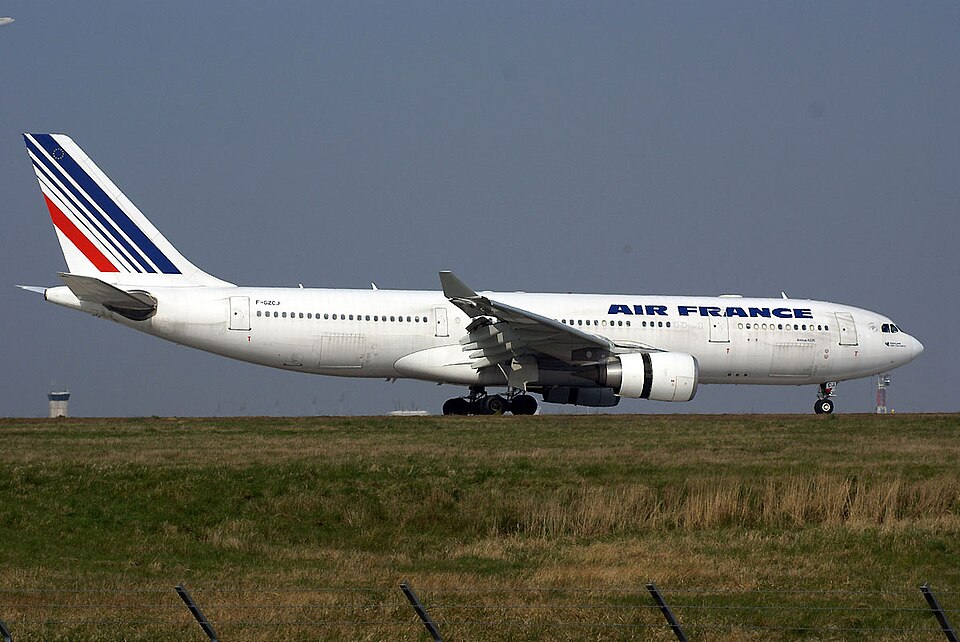
On 31 December 2020, an Airbus A330-200 registered F-GZCJ, operated by Air France, departed Brazzaville, Congo, at 21:13 UTC, bound for Paris-Charles de Gaulle, France. The aircraft carried 136 passengers, a captain (pilot monitoring), a co-pilot (pilot flying), a relief pilot, and eight cabin crew members. The total fuel on board was 45.5 tons. The takeoff and climb were uneventful.
Fuel Leak Detection and Crew Actions
Approximately 35 minutes after takeoff, while cruising at Flight Level 380, the crew noticed a fuel discrepancy of about 1.4 tons. They monitored the fuel quantities. Before the captain left for his rest period, he instructed the co-pilots to continue monitoring. About 20 minutes later, the co-pilots called him back, reporting a discrepancy of 2.1 tons. The crew initiated the FUEL LEAK procedure but stopped at the step requiring shutdown of the engine on the suspected side (left side), deciding to keep both engines running.
Diversion and Landing
The crew diverted to N'Djamena Airport, Chad. They performed an RNAV approach to runway 23 and landed 1 hour and 47 minutes after identifying the leak. Upon touchdown, the Runway Overrun Prevention System (ROPS) warning activated. The pilot flying applied heavy braking, causing brake temperatures to reach 600°C. Both engines remained operational throughout the flight and after landing. The aircraft turned around at the end of the runway and shut down engine 1 (left engine) while taxiing to the parking area. After parking, engine 2 was shut down about ten minutes later. Firefighters, who had been positioned near the runway, sprayed water under engine 1 after engine 2 was shut down. Passengers disembarked without incident.
Post-Flight Findings
The flight duration was 2 hours 21 minutes. Between takeoff and engine shutdown, an estimated 5.7 tons of fuel were lost, with 5.3 tons lost in flight. Examination of engine 1 revealed a fuel leak at the mounting flange of the Primary Fuel Hose (PFH), which connects the pylon to the engine.
Investigation Outcome
The French civil aviation safety investigation authority (BEA) conducted the investigation. No injuries were reported. The BEA issued a safety recommendation concerning the operator’s compliance with procedures.