Ultralight Crash in Chonburi Kills Pilot Due to Wing Fabric Failure
An X-AIR HAWK ultralight crashed in Chonburi, Thailand, killing the pilot and injuring a passenger. The accident was caused by deteriorated wing fabric and…
On March 21, 1989, a Boeing 707 (registration PT-TCS) operated by Transbrasil was involved in an aviation accident near São Paulo-Guarulhos, Brazil during landing or approach. 25 people were killed. Investigators recorded the probable cause as: The accident was the consequence of the combination of the following factors: the imminent interruption of operations in the aerodrome that would be used for landing the aircraft (closure of runway 09R due to works) stimulated the instructor to make a hurried… This summary draws on records from the Bureau of Aircraft Accidents Archives (B3A); 5 related events involving the same aircraft type or operator are linked below.
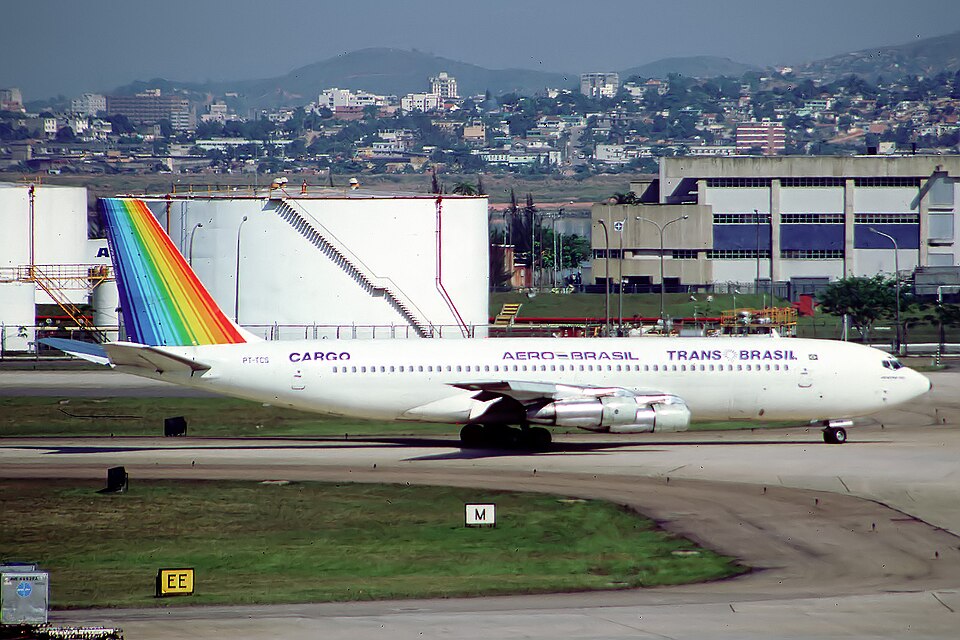
A cargo flight from Manaus to São Paulo crashed into a residential area after a hurried approach. The accident killed 25 people and injured 47 others.
The accident was the consequence of the combination of the following factors: the imminent interruption of operations in the aerodrome that would be used for landing the aircraft (closure of runway 09R due to works) stimulated the instructor to make a hurried descent, characterizing a potential state of anxiety; probable crew fatigue; the instruction given to the pilot was discontinued and the local flight did not comply with the minima provided in RAC 3211; the failures found in the instruction were due to poor supervision of the Company's operations sector; poor crew coordination; during the descent procedure when working checklist, the instructor broke the sequence of standardized procedures, thus stopping the instruction and consequently, the student's core handling of the flight; the instructor, without the student being informed beforehand, commanded the flaps together with the speed brakes. This action configured an abnormal attitude that contributed, without the pilots identifying, to the loss of control of the aircraft; the flight engineer also failed to meet the checklist items; the instructor did not follow the standardization of the instruction, when he executed a decision in a hurry; the crew did not respond to the sinking and pull up warnings; error in the application of flight controls; the crew did not operate in accordance with the operational standard issued by the manufacturer and endorsed by the company; the air traffic controller contributed to the increase of the crew anxiety level by using non standard phraseology.
An X-AIR HAWK ultralight crashed in Chonburi, Thailand, killing the pilot and injuring a passenger. The accident was caused by deteriorated wing fabric and…
A Challenger II Special ultralight aircraft (U-B23) landed off-runway at Pai Airport, Mae Hong Son, on September 17, 2024, due to a gust of wind. No injuries…
The Polish aviation safety authority is investigating a serious incident involving an AT-3R100 aircraft that occurred on September 2, 2024. The investigation…
A SZD-48-3 glider suffered damage when its left wing struck a ground obstacle during a low final approach at EPWK on June 20, 2025. The pilot was uninjured.
A 39-year-old skydiver died after a hard landing near Leszno on May 1, 2026. The PKBWL preliminary report indicates the fatal impact resulted from a late,…
A student pilot crashed an SZD-50-3 Puchacz glider into the airfield fence during a solo training flight on June 6, 2026. The pilot was uninjured, but the…