5 fatalities

1991-10-29: Boeing 707 (A20-103) — Royal Australian Air Force - RAAF — Woodside Beach, Australia

Woodside Beach, AustraliaFlight

On October 29, 1991, a Boeing 707 (registration A20-103) operated by Royal Australian Air Force - RAAF was involved in an aviation accident near Woodside Beach, Australia in flight. 5 people were killed. Investigators recorded the probable cause as: The Board of Inquiry concluded that the instructor devised a demonstration of asymmetric flight that was 'inherently dangerous and that was certain to lead to a sudden departure from controlled flight' and that he did not appreciate this. This summary draws on records from the Bureau of Aircraft Accidents Archives (B3A); 8 related events involving the same aircraft type or operator are linked below.

Sourcesthe Bureau of Aircraft Accidents Archives (B3A)Primary reportUpdated 1781211591Data APIEditorial standards
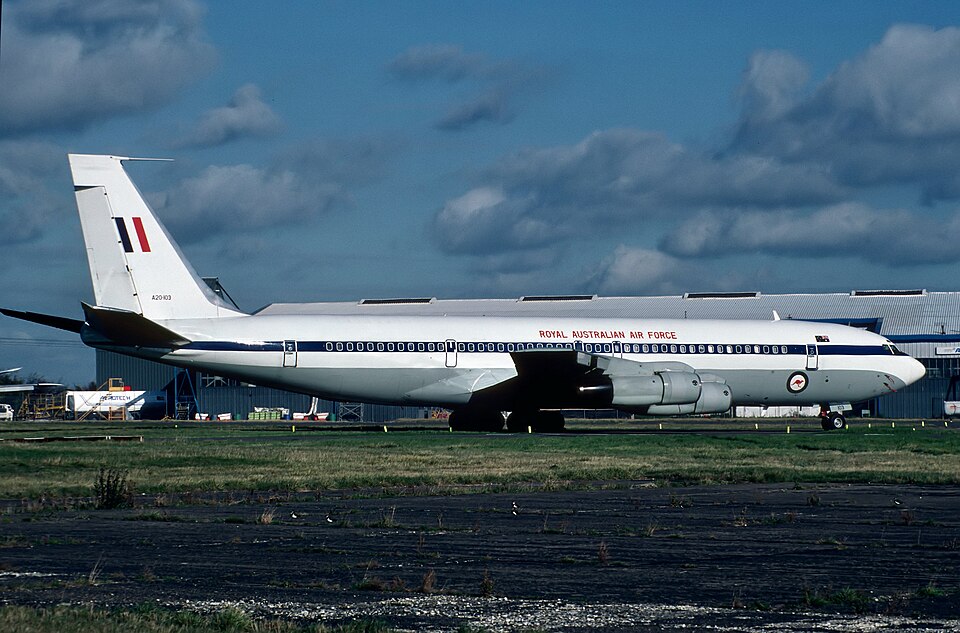
Aircraft registered A20-103
Aircraft registered A20-103. Photo: Colin Cooke Photo / CC BY-SA 2.0, via Wikimedia Commons

A Boeing 707 on a flight from Richmond to Avalon crashed into the sea off Woodside Beach, killing all five crew members. The Board of Inquiry cited an inherently dangerous asymmetric flight demonstration and systemic knowledge deficiencies.

Accident Overview

On a routine flight from Richmond to Avalon, a Boeing 707 carrying five crew members was cruising at 5,000 feet along the coast when it lost altitude and plunged into the sea. The wreckage was recovered approximately one kilometer off Woodside Beach. All five occupants were killed. Weather conditions at the time were reported as good.

Crew

The crew consisted of Captain Mark Lewin (pilot), Flight Lieutenant Tim Ellis (copilot), Flight Lieutenant Mark Duncan (pilot), Warrant Officer Jon Fawcett (flight engineer), and Warrant Officer Al Gwynne (loadmaster).

Official Findings

The Board of Inquiry concluded that the instructor had devised a demonstration of asymmetric flight that was 'inherently dangerous and that was certain to lead to a sudden departure from controlled flight.' The Board noted that the instructor did not appreciate the danger of this maneuver.

Additionally, the Board identified several systemic issues: deficiencies in the acquisition and documentation of 707 operational knowledge within the Royal Australian Air Force (RAAF), an absence of effective mechanisms to prevent the erosion of operational knowledge during a period of high pilot attrition, a lack of an official 707 QFI conversion course and syllabus, inadequate QFI instructors' manuals, deficiencies in documented procedures and limitations for asymmetric flight, and a lack of fidelity in the RAAF 707 simulator in the relevant flight regime—leading to the need for actual in-flight practice.

The Board stated: 'The captain acted with the best of intentions but without sufficient professional knowledge or understanding of the consequences of the situation in which he placed the aircraft.'

Probable cause

The Board of Inquiry concluded that the instructor devised a demonstration of asymmetric flight that was 'inherently dangerous and that was certain to lead to a sudden departure from controlled flight' and that he did not appreciate this. Contributing factors included deficiencies in 707 operational knowledge acquisition and documentation within the RAAF, absence of effective mechanisms to prevent erosion of operational knowledge, lack of an official 707 QFI conversion course and syllabus, inadequate QFI instructors' manuals, deficiencies in documented asymmetric flight procedures and limitations, and insufficient simulator fidelity in the relevant flight regime.