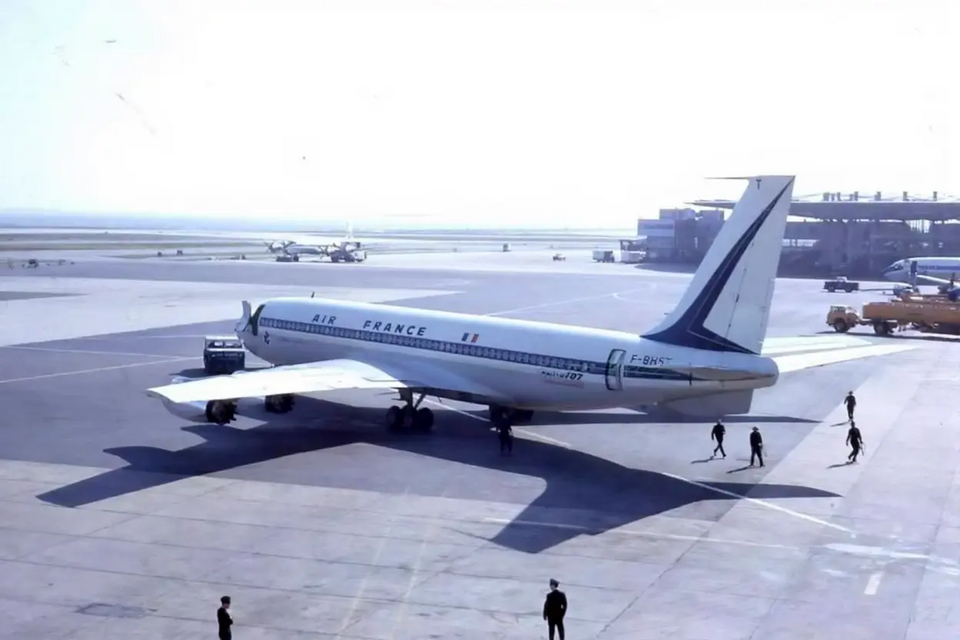
Accident
A four-engine aircraft operating a flight from Paris to Santiago de Chile crashed while descending to Pointe-à-Pitre. The accident occurred at night as the crew approached Le Raizet Airport. The aircraft struck the slope of a hill 427 m high, located 25 km northwest of the airport. It came to rest in a dense wooded area and was destroyed by the impact and a subsequent fire. All 113 occupants—including passengers and crew—were killed.
At the time of the accident, weather conditions at the destination were poor, worse than had been forecast. Visibility was low due to thunderstorm activity in the area. The VOR at Pointe-à-Pitre was unserviceable, making the approach possible only via an NDB. The aircraft was 15 km off the intended flight path because of interference on the ADF systems, which was caused by the thunderstorm activity.
Crew
The crew consisted of pilot Mr. Lesieur, copilot Mr. Farret, navigator Mr. Hurlimann, mechanic Mr. Pruvost, stewardesses Mrs. Micoud, Mrs. D’Horne, and Mrs. Page, and stewards Mr. Epper, Mr. Gassler, and Mr. Cage.
Probable Cause
The accident was the consequence of the combination of the following factors:
- Poor weather conditions at destination, worse than forecast,
- Lack of visibility due to weather combined with the night,
- The VOR of Pointe-à-Pitre was unserviceable at the time of the accident,
- The approach was possible via an NDB only,
- The ADF indications were incorrect due to thunderstorm activity (atmospheric effects), causing the aircraft to be off course by 15 km.