No fatalities

2000-03-19: Boeing 727-100 (OB-1731) — Aviandina — Tacna, Peru

Tacna, PeruLanding (descent or approach)

On March 19, 2000, a Boeing 727-100 (registration OB-1731) operated by Aviandina was involved in an aviation accident near Tacna, Peru during landing or approach. No fatalities were reported. Investigators recorded the probable cause as: The rupture of the shaft lower assembly, caused by material fatigue, which is located inside the right main landing gear well (MLG, RH) in a very difficult to reach position and hidden within other components, which it passes through. This summary draws on records from the Bureau of Aircraft Accidents Archives (B3A); 8 related events involving the same aircraft type or operator are linked below.

Sourcesthe Bureau of Aircraft Accidents Archives (B3A)Primary reportUpdated 1781203665Data APIEditorial standards
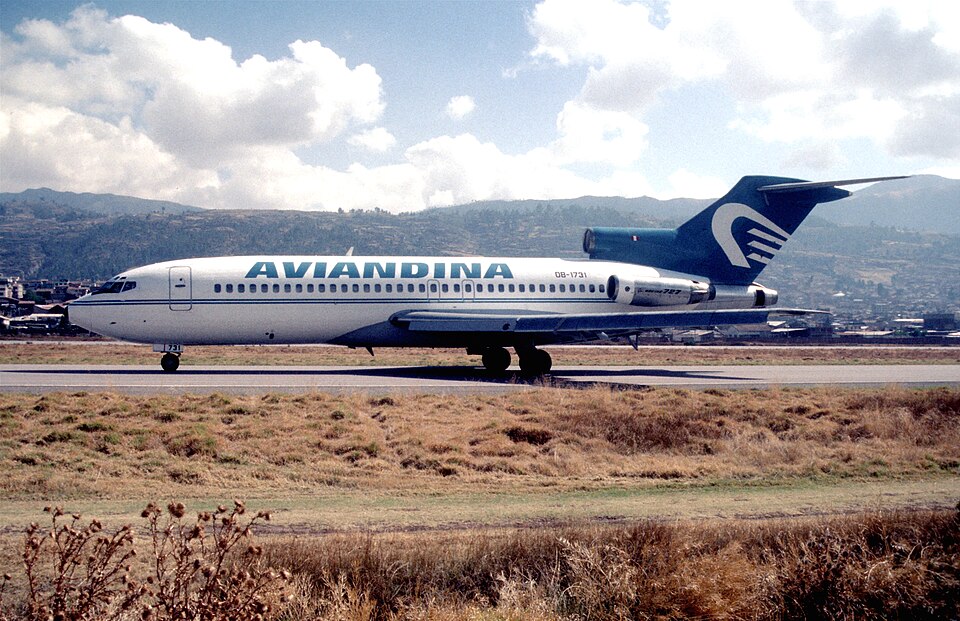
Aircraft registered OB-1731
Aircraft registered OB-1731. Photo: Aero Icarus from Zürich, Switzerland / CC BY-SA 2.0, via Wikimedia Commons

En route from Arequipa to Juliaca, a jammed right main landing gear forced a diversion to Tacna. The aircraft landed 280 meters past the threshold, veered right, and came to rest. All 65 occupants evacuated safely. Investigation attributed the failure to material fatigue causing rupture of a shaft assembly.

Incident Details

The flight, en route from Arequipa to Juliaca, encountered a problem with the right main landing gear. The gear jammed and remained blocked in its main wheel well. The crew attempted to lower the gear using the manual system, but was unable to do so.

Diversion and Emergency Landing

With no other options, the crew decided to divert to Tacna for an emergency landing. The aircraft landed 280 meters past the threshold of runway 20. After touchdown, the aircraft veered to the right and came to rest 600 meters after landing.

Evacuation

All 65 occupants evacuated safely. The aircraft was not repaired and the incident ended without any reported injuries.

Probable Cause

The official investigation determined the probable cause to be the rupture of the shaft lower assembly, caused by material fatigue. This part is located inside the right main landing gear well in a difficult-to-reach position, hidden within other components. The rupture prevented the landing gear system from completing the secured gear down cycle and also prevented the emergency manual landing gear lowering system from operating. The crew, with no other options, made the best decision to perform a forced landing. The part was within its inspection time limits.