No fatalities

2015-11-26: Boeing 737-300 (XA-UNM) — Magnicharters — Mexico City-Benito Juarez, Mexico

Mexico City-Benito Juarez, MexicoLanding (descent or approach)

On November 26, 2015, a Boeing 737-300 (registration XA-UNM) operated by Magnicharters was involved in an aviation accident near Mexico City-Benito Juarez, Mexico during landing or approach. No fatalities were reported. Investigators recorded the probable cause as: Fracture of the shimmy damper piston and subsequent retraction of the left leg assembly of the landing gear due to vibrations caused during the landing run, which could not be damped due to wear and play existing between the dynamic parts of the links,… This summary draws on records from the Bureau of Aircraft Accidents Archives (B3A); 13 related events involving the same aircraft type or operator are linked below.

Sourcesthe Bureau of Aircraft Accidents Archives (B3A)Primary reportUpdated 1781192649Data APIEditorial standards
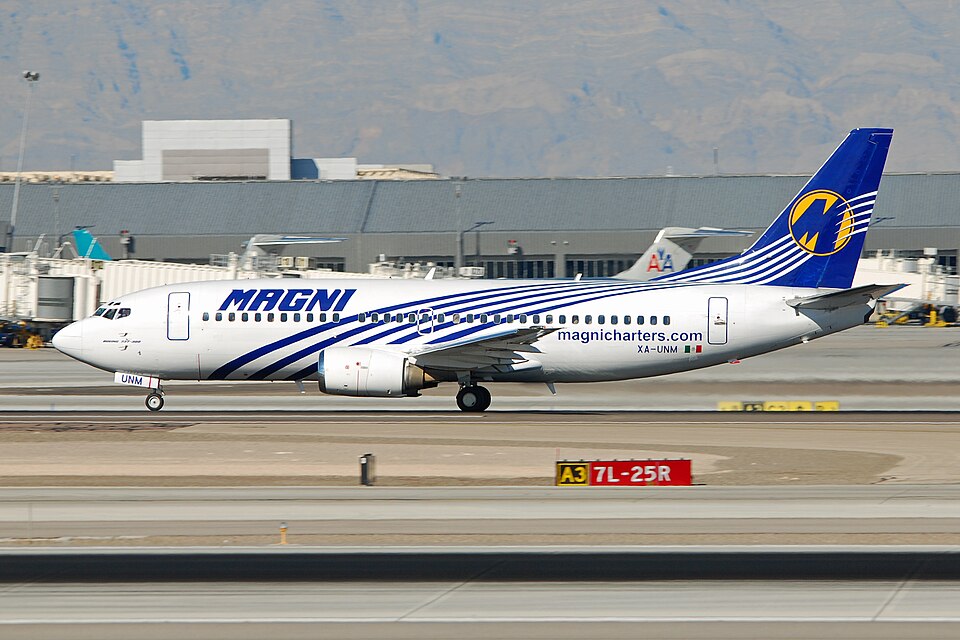
Aircraft registered XA-UNM
Aircraft registered XA-UNM. Photo: Eddie Maloney from North Las Vegas, USA / CC BY-SA 2.0, via Wikimedia Commons

An aircraft on a scheduled flight from Cancún to Mexico City landed at excessive speed, causing the left main gear to collapse after 1,097 meters. The airplane slid 980 meters; all 144 occupants evacuated safely. Official findings cite shimmy damper failure and contributing factors.

Flight Details

The aircraft was operating a regular scheduled flight from Cancún to Mexico City, carrying 139 passengers and five crew members. The flight was uneventful until the approach phase.

Accident Sequence

After an unstabilized approach, the aircraft landed on runway 05L at an excessive speed. Following touchdown, severe vibrations occurred, and the left main landing gear collapsed after the aircraft had traveled 1,097 meters. The airplane then slid for an additional 980 meters before coming to rest. All 144 occupants evacuated safely, but the aircraft sustained damage beyond repair.

Probable Cause and Contributing Factors

The official investigation identified the probable cause as a fracture of the shimmy damper piston, which led to the retraction of the left leg assembly of the landing gear. This was due to vibrations during the landing run that could not be damped because of wear and play existing between the dynamic parts of the links, fittings, and apex joint of the shimmy damper.

Contributing factors included the unstabilized approach, inadequate servicing of the shimmy damper and shock strut, landing with a low rate of descent, wear in the apex joint due to play between it and the lower torsion link, and landing with high ground speed and low descent rate.