Overview
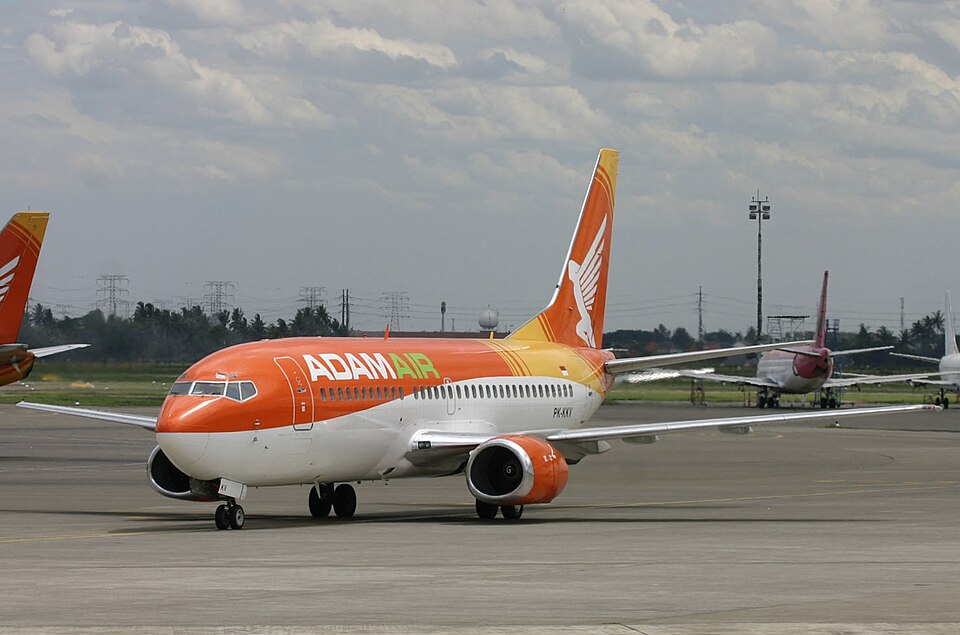
A scheduled passenger flight from Soekarno-Hatta Airport, Jakarta to Juanda Airport, Surabaya, East Java, experienced a hard landing that caused severe damage to the aircraft. There were 155 persons on board, including 7 crew members and 148 passengers.
Flight History
During the flight, the flight crew did not declare any abnormalities. Weather conditions at Surabaya at the time of landing included thunderstorm and rain, with wind from 240 degrees at 7 knots and visibility of 8,000 meters.
Cockpit Voice Recorder Findings
The cockpit voice recorder (CVR) revealed that the flight crew engaged in conversation unrelated to the flight's progress until the aircraft descended through 2,000 feet. The discussion concerned the company fuel policy and training program. The CVR did not record any approach briefing or checklist reading. On final approach to runway 28, passing 800 feet, the approach lights were in sight and landing clearance was received. Prior to touchdown, control of the aircraft was transferred from the co-pilot to the pilot-in-command (PIC). The CVR also recorded Ground Proximity Warning System (GPWS) alerts of "Sink Rate" and "Pull Up."
Landing and Evacuation
Upon landing, the right wheel track deviated approximately 4 meters off the runway before returning. The aircraft came to a stop about 100 meters from taxiway N3. After touchdown, the fuselage aft of passenger seat row 16 was bent downward. Passengers became panicked. Flight attendants evacuated all passengers via all available exits, and the door slides were inflated. Two passengers sustained minor injuries. The aircraft suffered severe damage.
Probable Cause
The official investigation concluded that the aircraft experienced an excessive sink rate upon touchdown. The approach was unstable even below 200 feet. The high vertical acceleration resulted in severe structural damage. The flight crew did not comply with several procedures published by the Boeing company and did not respond to the GPWS alerts and warnings.