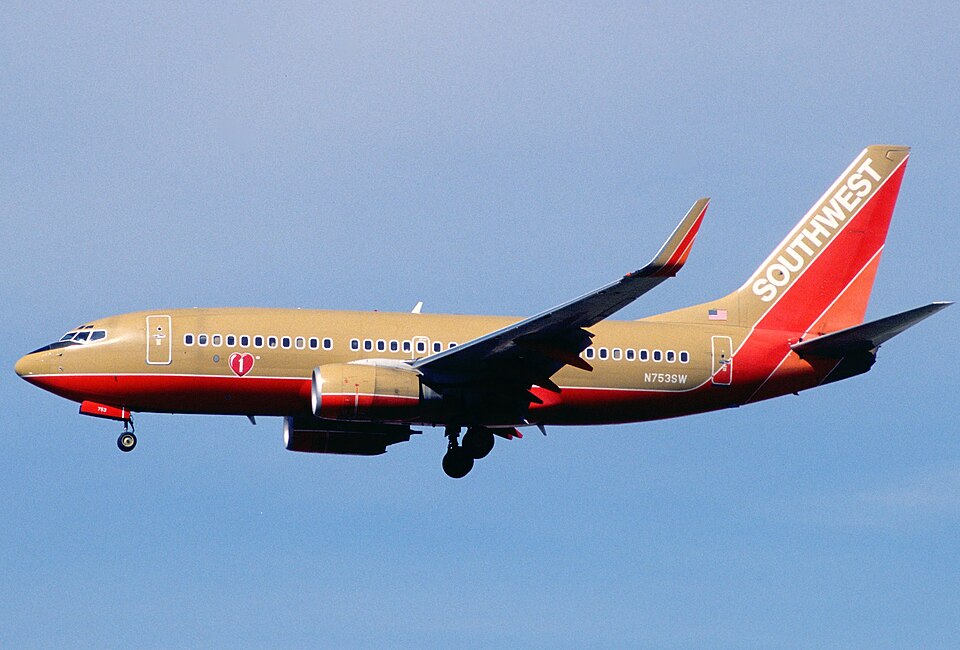
Flight Approach and Configuration
The airplane was on final approach when the captain, serving as the pilot monitoring (PM), noticed that the flaps were not set to the briefed 40 degrees. Flight data recorder (FDR) data show that the captain selected flaps 40 as the airplane descended through about 500 ft altitude, approximately 51 seconds before touchdown.
Descent and Glideslope Deviation
Between 100 and 200 ft altitude, the airplane was above the glideslope. Concerned, the captain repeatedly exclaimed "get down" to the first officer about 9 seconds from touchdown.
Transfer of Control
About 3 seconds from touchdown, at roughly 27 ft altitude, the captain announced "I got it," indicating she was taking control. The first officer replied "ok, you got it." According to FDR data, after the captain took control, the control column relaxed to a neutral position and the throttles were not advanced until about 1 second before touchdown.
Touchdown and Landing
The airplane touched down at a descent rate of 960 ft per minute with a nose-down pitch attitude of -3.1 degrees. This caused the nose gear to contact the runway first, resulting in a hard landing. The airplane came to a stop on the right side of the runway centerline, about 2,500 ft from its initial touchdown point.
Stabilized Approach Criteria
The operator's stabilized approach criteria require an immediate go-around if the flaps or landing gear are not in the final landing configuration by 1,000 ft above the touchdown zone. In this case, the flaps were not correctly configured until the airplane passed through 500 ft. Additionally, the airplane's deviation above the glideslope at 100 to 200 ft provided another opportunity for the captain, as PM, to call for a go-around, as specified in the Southwest Airlines Flight Operations Manual (FOM). Accident data suggest that pilots often fail to perform a go-around when stabilized approach criteria are not met. A review of NTSB-investigated accidents found that about 75% were the result of plan continuation errors. Line operations safety audit data from 2011 indicated that 97% of unstabilized approaches were continued to landing despite violating standard operating procedures (SOPs).
Crew Actions and Procedures
The Southwest FOM states that the captain can take control of the airplane for safety reasons. However, the decision to take control at 27 ft did not allow adequate time to correct the airplane's deteriorating energy state and prevent the nose gear from striking the runway. The late transfer of control resulted in neither pilot being able to effectively monitor the airplane's altitude and attitude. The first officer reported that after the captain took control, he scanned the altimeter and airspeed to gain situational awareness but became distracted by the runway "rushing" up and said "there was no time to say anything." The captain should have called for a go-around when the approach became unstabilized well before attempting to salvage the landing at low altitude. The captain also did not follow SOPs at several points. As PM, she should have made the standard callout when above glideslope, stating "glideslope" and adding a descriptive word, but instead repeatedly said "get down." The transfer of control was also contrary to the FOM, which indicates the PM should say "I have the aircraft." The flight crew's performance demonstrated poor crew resource management.
Probable Cause
The captain's attempt to recover from an unstabilized approach by transferring airplane control at low altitude instead of performing a go-around. Contributing to the accident was the captain's failure to comply with standard operating procedures.