Incident Overview
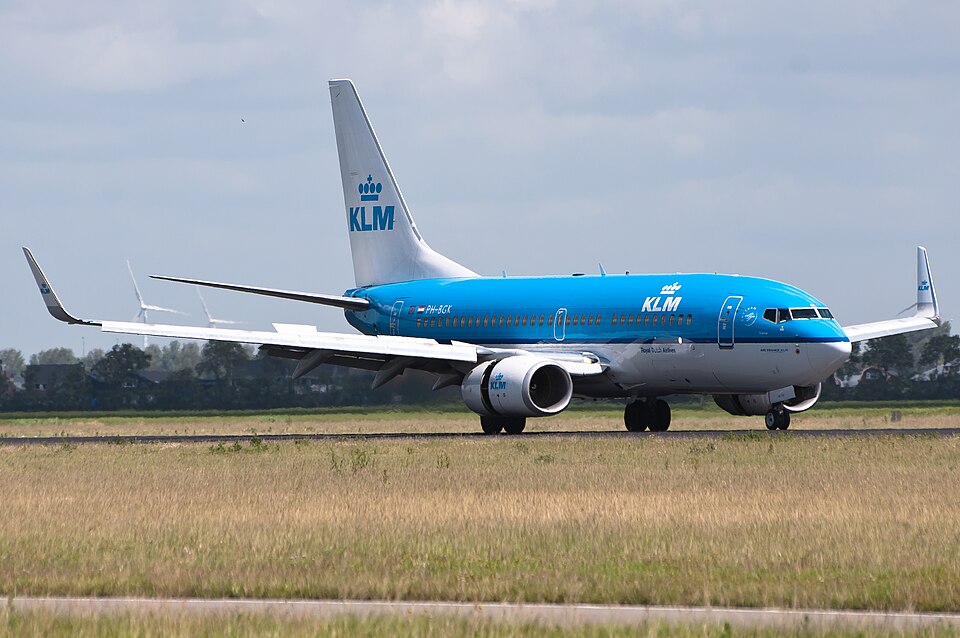
On Thursday 29 March 2018, at around 19:56 local time, an incident occurred in the airspace near Amsterdam Airport Schiphol involving two Boeing 737 aircraft. The first aircraft, registration PH-BGK (Boeing 737-700), was conducting a go-around on Runway 18C. The second aircraft, registration PH-HXF (Boeing 737-800), had just commenced its takeoff procedure from Runway 24. Because the two runways converge, the flight paths were set to intersect.
Sequence of Events
Shortly before landing on Runway 18C, the crew of the Boeing 737-700 reported their intention to perform a go-around. At that time, the runway controller had already issued clearance to the Boeing 737-800 to start its takeoff procedure. The runway controller attempted to instruct the Boeing 737-800 to abort its takeoff, but the instruction contained the wrong flight number, so the crew did not respond and the aircraft took off. Recognizing the potential conflict, the runway controller issued instructions to both aircraft to perform divergent turns to increase separation. The crews of both aircraft immediately complied, as they had also recognized the hazardous situation. The smallest separation between the two aircraft was approximately 960 metres horizontally and 300 feet vertically.
Underlying Procedures
The occurrence took place because the procedures in the Operations Manual of Air Traffic Control the Netherlands (LVNL) allow the simultaneous use of two converging runways for aircraft landing and taking off. Although the basic rule requires that takeoff clearance is only issued after the landing on the dependent runway has been confirmed, an exception permits reduced separation under certain conditions. This exception allows takeoff clearance to be given before the landing aircraft has actually landed. In the event of a go-around, without immediate measures, the aircraft can become undesirably close. The procedure for reduced separation had not been explicitly approved by the Human Environment and Transport Inspectorate (ILT); it existed in the former manual and was implicitly approved when the entire Operations Manual was approved. The ILT could not trace the conversion process, and the procedure was not re-evaluated during subsequent amendments.
Conclusions
The Dutch Safety Board concluded that the runway controller observed the takeoff and was confronted with a potential conflict when the go-around was announced. Attempts to abort the takeoff failed, leading to a potentially hazardous situation. However, due to the controller's almost simultaneous intervention and the crews' responses, no actual collision hazard occurred. The procedure allowing reduced separation during dependent runway operations can create undesirable and potentially hazardous situations. LVNL should maintain the basic rule that takeoff clearance is only issued after landing on the dependent runway is confirmed, or if the landing aircraft is at least 2 NM from the runway threshold.