Summary
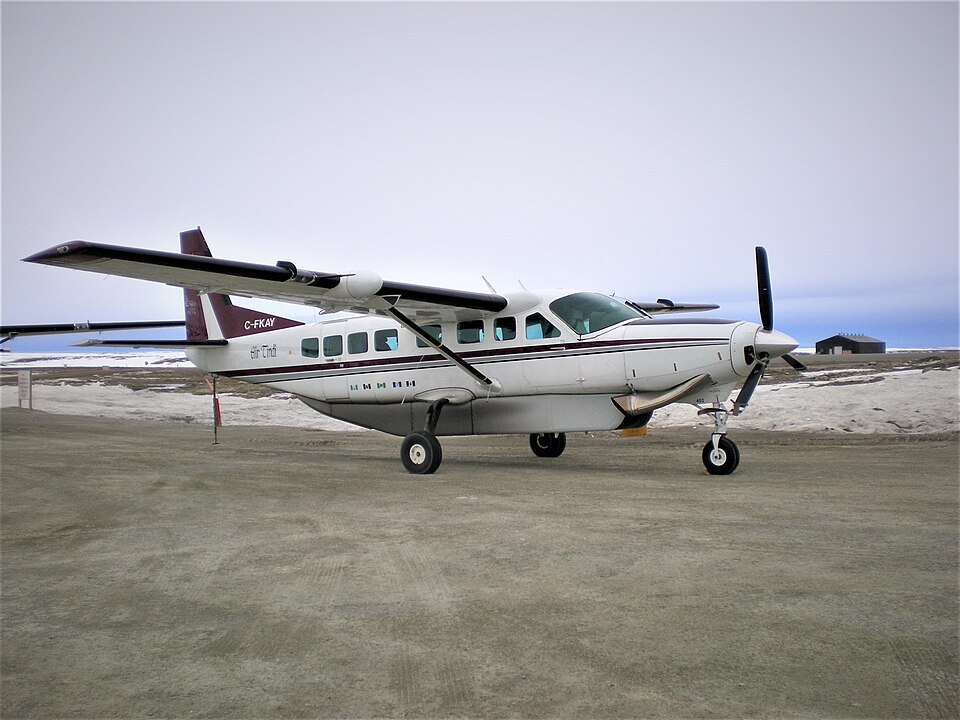
On 20 November 2014, a Cessna 208B Caravan operated by Air Tindi Ltd. departed Yellowknife Airport, Northwest Territories, as Discovery Air flight DA223, en route to Fort Simpson. The flight, originally scheduled the previous night, was rescheduled due to freezing drizzle at the destination. During climb to 8,000 feet above sea level under instrument flight rules, the aircraft encountered icing conditions, prompting a return to Yellowknife. On the return leg, the aircraft was unable to maintain altitude and, at 0721 Mountain Standard Time, in darkness approximately 18 nautical miles west of Yellowknife, it contacted the frozen surface of the North Arm of Great Slave Lake. The aircraft struck a rock outcropping, causing substantial damage. The pilot and five passengers were uninjured. The pilot used a satellite phone to contact Air Tindi, and all occupants were recovered about four hours after the landing. The emergency locator transmitter did not activate automatically but was manually activated by the pilot.
Flight Details
The flight departed Yellowknife at 0642 Mountain Standard Time under instrument flight rules. The aircraft was a Cessna 208B Caravan, operated by Air Tindi Ltd. as Discovery Air flight DA223, with one pilot and five passengers. The destination was Fort Simpson, Northwest Territories. The flight had been rescheduled from the previous night because of freezing drizzle at Fort Simpson.
Incident Sequence
During the climb to 8,000 feet above sea level, the aircraft encountered icing conditions that necessitated a return to Yellowknife. On the return, the aircraft was unable to maintain altitude. At 0721, while flying in darkness about 18 nautical miles west of Yellowknife, it contacted the frozen surface of the North Arm of Great Slave Lake. The aircraft sustained substantial damage upon striking a rock outcropping. There were no injuries to the pilot or the five passengers. The pilot established communication with Air Tindi via satellite phone, and the pilot and passengers were recovered approximately 4 hours after the landing. The emergency locator transmitter did not activate during the landing but was manually activated by the pilot.
Probable Cause
The official investigation identified the following findings as to causes and contributing factors: 1. Not using all enroute information led the pilot to underestimate the severity and duration of the icing conditions that would be encountered. 2. Inadequate awareness of aircraft limitations in icing conditions and incomplete weight-and-balance calculations led to the aircraft being dispatched in an overweight state for the forecast icing conditions. The aircraft centre of gravity was not within limits, increasing stall speed and reducing climb performance. 3. The pilot’s expectation that the flight was at altitudes where icing could be avoided or quickly escaped led to the decision to continue operation in icing conditions exceeding aircraft performance capabilities. 4. The severity and duration of the icing conditions resulted in reductions in aerodynamic performance, making descent unavoidable. 5. The inability to arrest descent led to the forced landing on the lake surface and collision with terrain. 6. The Type C pilot self-dispatch system employed by Air Tindi lacked quality assurance oversight and adequate support systems, contributing to the aircraft being dispatched in unsuitable conditions.
Additional findings noted that the aircraft was under control and in a level attitude when contacting the ice, minimizing structural damage and increasing survivability. The survival skills of the crew and passengers were crucial given limited access to survival equipment.