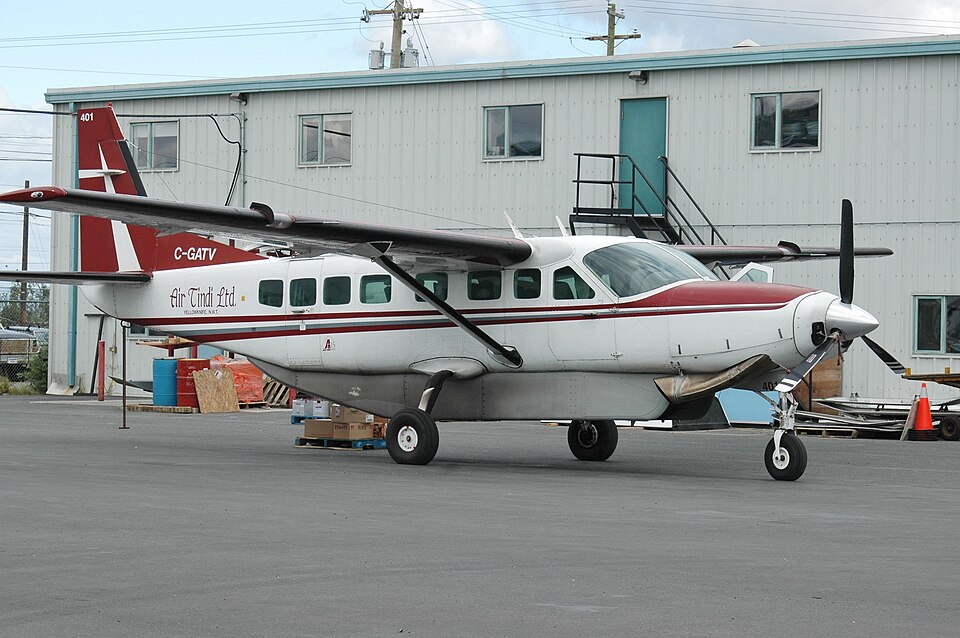
Accident Overview
Air Tindi Ltd. flight 200 (8T200), a Cessna 208B Caravan, departed Yellowknife, Northwest Territories, at 1103 Mountain Daylight Time under visual flight rules for a scheduled flight to Lutsel K'e, Northwest Territories. When the aircraft did not arrive at its scheduled time, a search was initiated. The aircraft was found 26 nautical miles west of Lutsel K'e, near the crest of Pehtei Peninsula. The pilot and one passenger suffered fatal injuries, while two passengers were seriously injured. There was no post-impact fire, and no emergency locator transmitter (ELT) signal was received by the Joint Rescue Coordination Centre or search aircraft.
Investigation Findings
Probable Cause: The aircraft was flown at low altitude into an area of low forward visibility during a day VFR flight, which prevented the pilot from seeing and avoiding terrain. The concentrations of cannabinoids were sufficient to have caused impairment in pilot performance and decision-making on the accident flight.
Risk Findings: Installation instructions for the ELT did not provide a means of determining the necessary degree of strap tightness to prevent the ELT from being ejected from its mount during an accident. Resultant damages to the ELT and antenna connections could preclude transmission of an effective signal, affecting search and rescue of the aircraft and occupants. Additionally, flying beyond gliding distance of land without personal floatation devices on board exposes the occupants to hypothermia and/or drowning in the event of a ditching.
Other Findings: Earlier on the day of the accident, the pilot flew the route from Fort Simpson to Yellowknife in cloud on a visual flight rules flight plan in controlled airspace. With the ELT unable to transmit a useable signal, the SkyTrac system in C GATV was instrumental in locating the accident site. This reduced the search time and allowed for timely rescue of the seriously injured survivors.