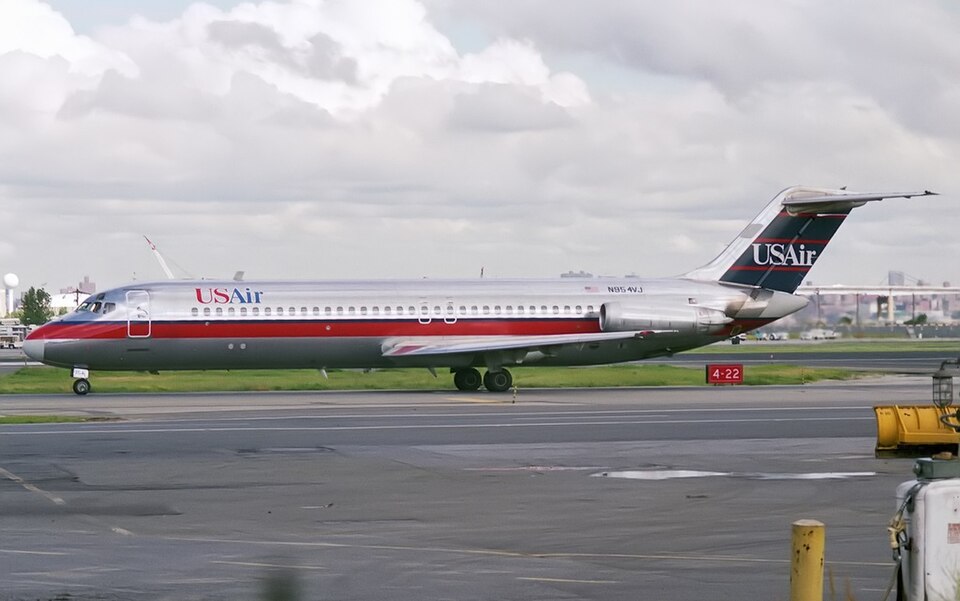
What happened
On the evening of the accident, USAir Flight 1016, a DC-9, was operating a domestic flight from Columbia, South Carolina, to Charlotte, North Carolina. During the approach phase, the flightcrew observed thunderstorm cells on their weather radar near the airport. While the crew was maneuvering for a visual approach to runway 18R, they encountered significant wind fluctuations.
At approximately 18:40, the tower controller issued wind updates indicating increasing wind speeds. Shortly thereafter, a windshear alert was broadcast by the tower. As the aircraft was on final approach, the crew experienced a sudden change in wind velocity and initiated a go-around procedure. During this transition, the aircraft's thrust was not set to the required level for a missed approach, and the pitch attitude was reduced significantly.
As the flaps were transitioning between settings, the aircraft encountered intense windshear. The plane experienced a massive shift in wind direction, moving from a 35-knot headwind to a 26-knot tailwind within a 14-second window—a total change of 61 knots. The DC-9 subsequently stalled and struck the ground at 18:42:35, resulting in fatalities and injuries.
Findings
Investigation into the accident identified several critical factors:
- The flightcrew elected to proceed with an approach into intense convective weather that was prone to microburst activity.
- There was a failure by the crew to identify the windshear event quickly enough to react.
- The crew failed to maintain the necessary thrust and pitch attitude required to recover from the windshear.
- The aircraft encountered a microburst-induced windshear produced by a developing thunderstorm.
- Air traffic control did not provide real-time updates regarding the specific windshear hazards and radar weather information.
- The onboard windshear warning system failed to activate during the encounter due to inadequate software logic.