Background
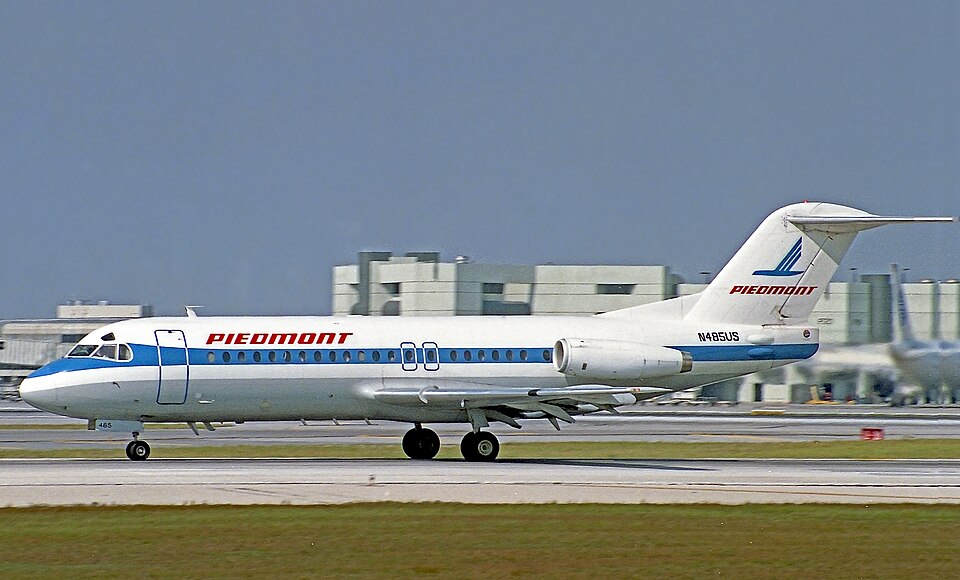
USAir flight 405 was a scheduled passenger flight from Jacksonville, Florida (JAX) to Cleveland, Ohio (CLE) with an intermediate stop at New York's LaGuardia Airport (LGA). The flight was originally scheduled to depart Jacksonville at 16:35 but was delayed due to poor weather in the New York area and a passenger who chose to deplane. The aircraft, a Fokker F-28, departed Jacksonville at 17:15 and proceeded to LaGuardia without significant additional delays.
Sequence of Events
After an ILS approach to runway 04, the aircraft landed and taxied to Gate 1, arriving at approximately 19:49, 1 hour and 6 minutes behind schedule. The captain informed the line mechanic that the aircraft was "good to go" and left the cockpit, leaving the first officer to prepare for the next leg to Cleveland. Snow was falling as the aircraft was prepared for departure.
The airplane was de-iced with Type I fluid (50/50 water/glycol mixture) using two trucks. After de-icing, around 20:26, one of the de-icing trucks experienced mechanical problems and became immobilized behind the aircraft, causing a pushback delay of about 20 minutes. The captain requested a second de-icing, which was completed at approximately 21:00 after the aircraft was pushed away from the gate to accommodate a single de-icing truck.
At 21:05:37, the first officer contacted ground control for taxi clearance. The aircraft was cleared to taxi to runway 13. The flight crew completed the before-takeoff checklist during taxi, selected engine anti-ice for both engines, and briefed on using USAir's contaminated runway procedures, which called for flaps at 18 degrees and a reduced V1 speed of 110 knots. The captain placed an empty coffee cup on the flap handle as a reminder to keep flaps up during taxi. The first officer used the wing inspection light to examine the right wing a couple of times and observed no contamination.
Accident
At 21:33:50, flight 405 was cleared into position and hold on runway 13, and cleared for takeoff at 21:34:51. The takeoff was initiated. The first officer called out 80 knots at 21:35:25, V1 at 21:35:25, and Vr at 21:35:26. Approximately 2.2 seconds after the Vr callout, the nose landing gear left the ground. About 4.8 seconds later, the stick shaker activated, followed by six stall warnings. The airplane began rolling to the left. The captain leveled the wings, but the aircraft headed toward the water. The crew applied right rudder to avoid the water and attempted to maintain a flat attitude for impact. The airplane came to rest partially inverted at the edge of Flushing Bay, with parts of the fuselage and cockpit submerged. Several small residual fires broke out on the water and on the wreckage.
Probable Cause
The probable cause, as determined by the official investigation, was the failure of the airline industry and the Federal Aviation Administration to provide flight crews with procedures, requirements, and criteria compatible with departure delays in conditions conducive to airframe icing and the decision by the flight crew to take off without positive assurance that the airplane's wings were free of ice accumulation after 35 minutes of exposure to precipitation following de-icing. The ice contamination on the wings resulted in an aerodynamic stall and loss of control after lift-off. Contributing to the cause of the accident were the inappropriate procedures used by, and inadequate coordination between, the flight crew that led to a takeoff rotation at a lower than prescribed air speed.