Incident Overview
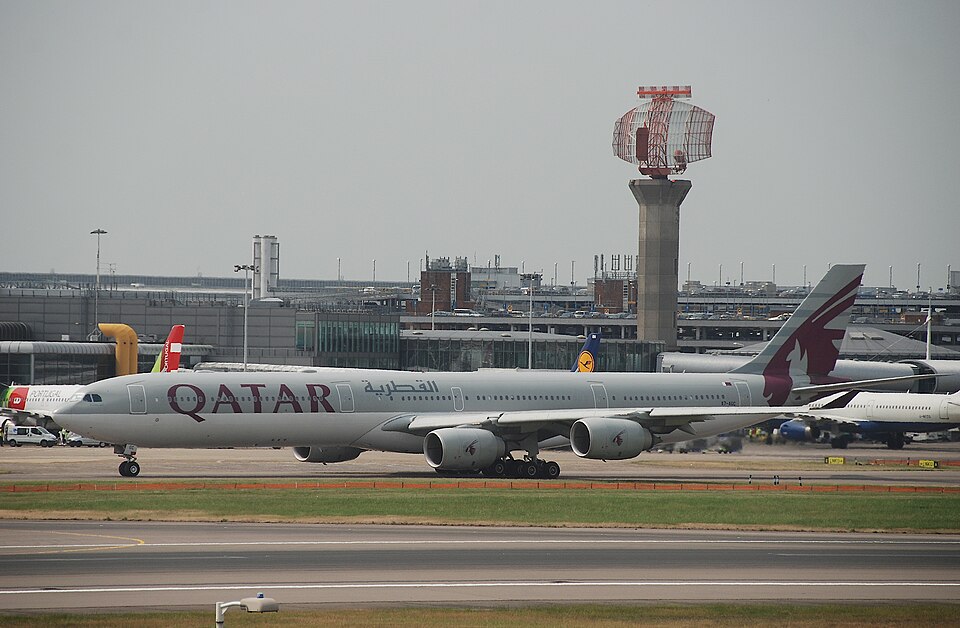
On July 14, 2017, at 13:50 local time, an Airbus A340-600, registration A7-AGC, operated by Qatar Airways as flight QTR 145, was taxiing to its assigned parking stand (No. 270) at Barcelona El Prat Airport (LEBL). The aircraft had landed normally on runway 25R after arriving from Hamad International Airport in Doha, Qatar. While moving along taxiway TWY Q7 in the southern apron, ramp 13, the No. 1 engine (left outboard) made contact with a service van operated by Iberia, which was carrying cones and chocks.
Sequence of Events
The van driver stated that he was directed to proceed to stand 420 for a 14:10 local time service. Unsure of the exact location, he drove toward stand 410 and then used service road VS405 to reach stand 420. While turning onto that road, he observed the aircraft approaching directly toward his position. He attempted to reverse the van but could not engage reverse gear, and the collision occurred. The aircraft continued taxiing to its parking stand.
Occupants and Injuries
The aircraft carried 14 crew and 283 passengers (total 297 persons on board). No injuries were reported among the occupants or the van driver. The driver, who had been employed since June 26, 2017, had less than one month of experience in ramp operations.
Damage
The Airbus A340-600 sustained deformations and scratches on the lower left part of the No. 1 engine cowling. The damage required the aircraft to remain grounded until repairs were completed. The service van suffered structural damage to its upper frame, including the windshield, roof, and right front door.
Aircraft and Personnel Information
The aircraft was an Airbus A340-600, registration A7-AGC, owned and operated by Qatar Airways. The captain, aged 55 and Indian national, held an ATPL license issued by the Queensland Civil Aviation Authority (QCAA, Australia) with A340 and IR ratings valid through November 17, 2018. He had 7,500 total flight hours, including 2,861 hours on the A340. The first officer, aged 25 and Bahraini national, held a CPL license from QCAA with A340 and IR ratings valid through August 24, 2018. He had 1,876 total flight hours, including 541 hours on the A340.
Investigation
The Spanish Civil Aviation Accident Investigation Commission (CIAIAC) conducted the investigation. The report did not state a specific probable cause or contributing factors.