Ultralight Crash in Chonburi Kills Pilot Due to Wing Fabric Failure
An X-AIR HAWK ultralight crashed in Chonburi, Thailand, killing the pilot and injuring a passenger. The accident was caused by deteriorated wing fabric and…
On November 9, 2007, an Airbus A340-600 (registration EC-JOH) operated by Iberia - Lineas Aéreas de Espana was involved in an aviation accident near Quito-Mariscal Sucre (City), Ecuador during landing or approach. No fatalities were reported. Investigators recorded the probable cause as: Wrong approach configuration by the crew, who continued the approach to Quito Airport knowing the poor runway conditions, poor weather conditions, and aircraft weight, and failed to initiate a go-around while forcing the aircraft to intercept the PAPI,… This summary draws on records from the Bureau of Aircraft Accidents Archives (B3A); 13 related events involving the same aircraft type or operator are linked below.
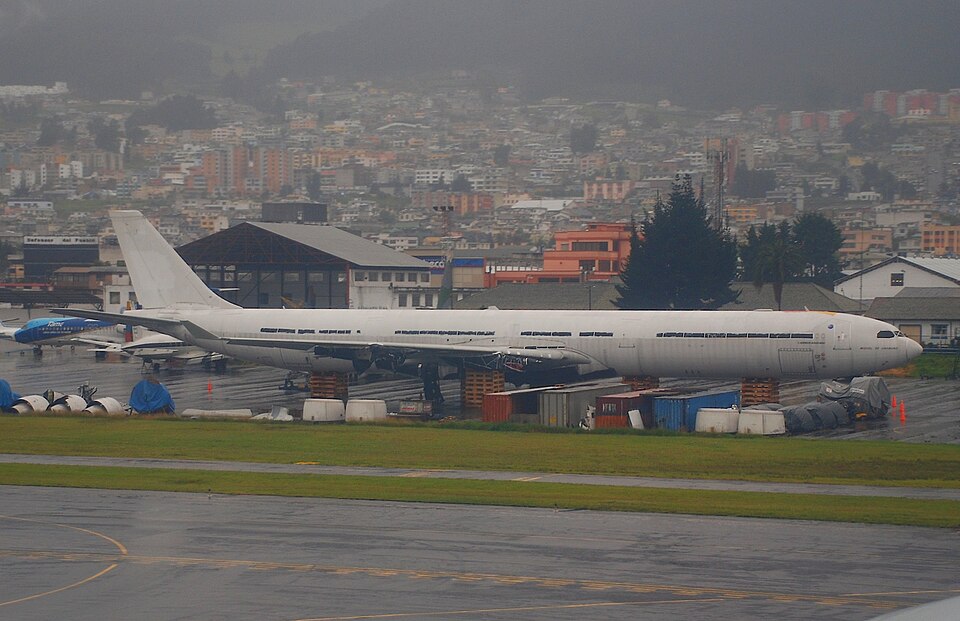
An Iberia aircraft overran runway 35 at Quito after an unstabilized approach in poor conditions. All occupants escaped uninjured, but the aircraft was damaged beyond repair.
Wrong approach configuration by the crew, who continued the approach to Quito Airport knowing the poor runway conditions, poor weather conditions, and aircraft weight, and failed to initiate a go-around while forcing the aircraft to intercept the PAPI, causing the aircraft to be unstabilized.
An X-AIR HAWK ultralight crashed in Chonburi, Thailand, killing the pilot and injuring a passenger. The accident was caused by deteriorated wing fabric and…
A Challenger II Special ultralight aircraft (U-B23) landed off-runway at Pai Airport, Mae Hong Son, on September 17, 2024, due to a gust of wind. No injuries…
The Polish aviation safety authority is investigating a serious incident involving an AT-3R100 aircraft that occurred on September 2, 2024. The investigation…
A SZD-48-3 glider suffered damage when its left wing struck a ground obstacle during a low final approach at EPWK on June 20, 2025. The pilot was uninjured.
A 39-year-old skydiver died after a hard landing near Leszno on May 1, 2026. The PKBWL preliminary report indicates the fatal impact resulted from a late,…
A student pilot crashed an SZD-50-3 Puchacz glider into the airfield fence during a solo training flight on June 6, 2026. The pilot was uninjured, but the…