104 fatalities

1972-01-07: Sud-Aviation SE-210 Caravelle (EC-ATV) — Iberia - Lineas Aéreas de Espana — Ibiza, Spain

Ibiza, SpainLanding (descent or approach)

On January 7, 1972, a Sud-Aviation SE-210 Caravelle (registration EC-ATV) operated by Iberia - Lineas Aéreas de Espana was involved in an aviation accident near Ibiza, Spain during landing or approach. 104 people were killed. Investigators recorded the probable cause as: It is believed that the accident was the result of a controlled flight into terrain due to a premature descent in limited visibility, causing the airplane to descend below the MDA. This summary draws on records from the Bureau of Aircraft Accidents Archives (B3A); 8 related events involving the same aircraft type or operator are linked below.

Sourcesthe Bureau of Aircraft Accidents Archives (B3A)Primary reportUpdated 1781234497Data APIEditorial standards
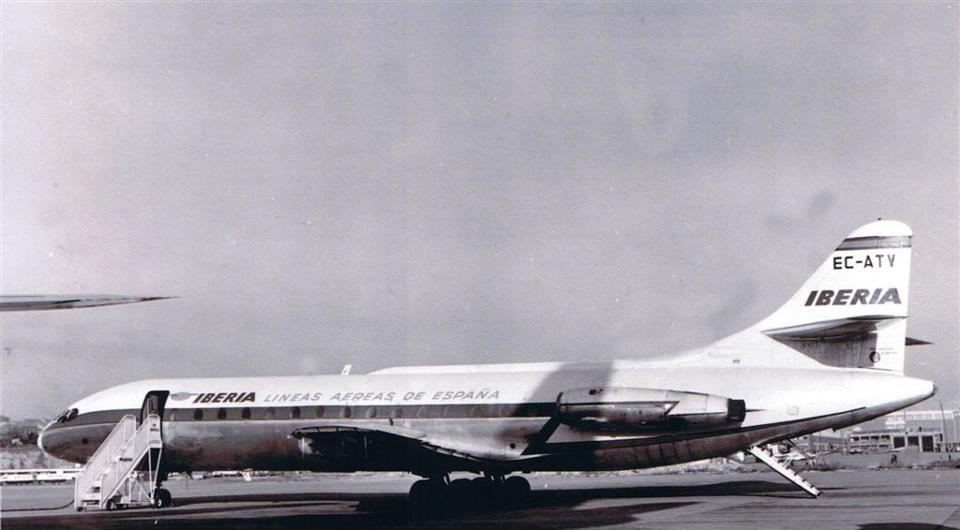
Aircraft registered EC-ATV
Aircraft registered EC-ATV. Photo: Deunoscuantos producciones audiovisuales / CC BY-SA 4.0, via Wikimedia Commons

On approach to Ibiza Airport in fog, a commercial aircraft struck a hill northwest of runway 07, killing all 104 occupants. Investigation cited controlled flight into terrain due to premature descent below MDA.

Accident

While approaching Ibiza Airport, the aircraft encountered poor visibility due to fog. The crew failed to realize their altitude was insufficient. Traveling at an excessive speed of 515 km/h, the airplane struck the slope of a hill located between Mt Rocas Altas (365 m) and Mt Atalaya de San José (301 m). The wreckage was found 8 km northwest of runway 07 threshold, approximately 30 meters below the summit. The aircraft disintegrated on impact, and all 104 occupants were killed.

Crew

The flight crew consisted of Captain José Luis Ballester Sepúlveda, Copilot Jesús Montesinos Sánchez, Flight Engineer Vicente Rodríguez Mesa, and stewards Pilar Merino López Baeza, Pilar Miravet Martín, and Manuel Fernández Cuesta.

Investigation and Probable Cause

The official investigation concluded that the accident was the result of a controlled flight into terrain due to a premature descent in limited visibility, causing the airplane to descend below the minimum descent altitude (MDA).