Flight Details
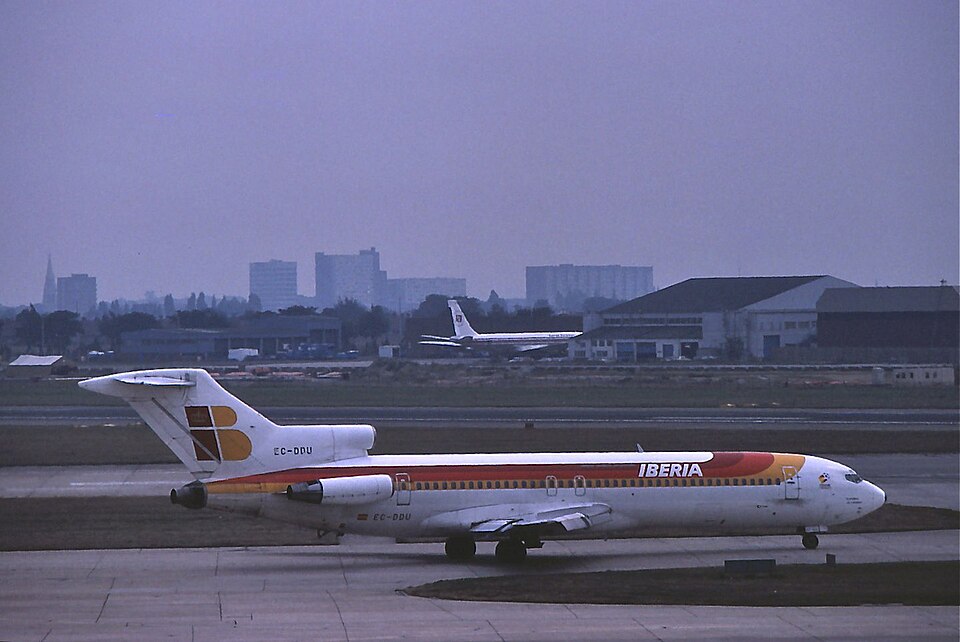
Iberia Flight 610 departed Madrid at 08:47 on a scheduled service to Bilbao, with an expected landing at 09:35. The aircraft, a Boeing 727 named "Alhambra de Granada", initially climbed to a cruising altitude of FL260.
Sequence of Events
At 09:09, the crew was instructed to descend to FL100. Seven minutes later, the copilot contacted Bilbao Tower. The controller cleared the flight for an Instrument Landing System (ILS) approach to runway 30, with wind reported as 100 degrees at 3 knots, QNH 1025, and transition level 70. The crew acknowledged. The controller then offered a direct clearance to the approach fix (located 13 DME from the airport), but the captain declined, opting to fly the standard approach procedure.
At 09:22, Flight 610 reported over the Bilbao VOR at 7,000 feet, beginning the standard approach. The aircraft descended to 5,000 feet three minutes later. The crew set the Altitude Alert System to 4,300 feet, while the minimum sector altitude was 4,354 feet. The system sounds a horn 900 feet before reaching the preset altitude in approach mode and 300 feet below in deviation mode. As the aircraft descended below the minimum sector altitude, the horn sounded at 4,040 feet. The crew interpreted this as the approach mode alert and continued descending.
Fifty-seven seconds after passing through the minimum sector altitude, the airplane struck the base of a television antenna structure near the top of Mount Oiz (3,356 feet high). The left wing separated, and the remaining fuselage crashed onto the hillside, cutting a path through trees. The aircraft disintegrated on impact, and all 148 occupants were killed.
Probable Cause
The official investigation attributed the accident to the crew's confidence in the automatic capture function of the Altitude Alert System, misinterpretation of its warnings, and a probable misreading of the altimeter. These factors led the crew to fly below the safety altitude, colliding with the television antenna base, resulting in the loss of the left wing and loss of control.