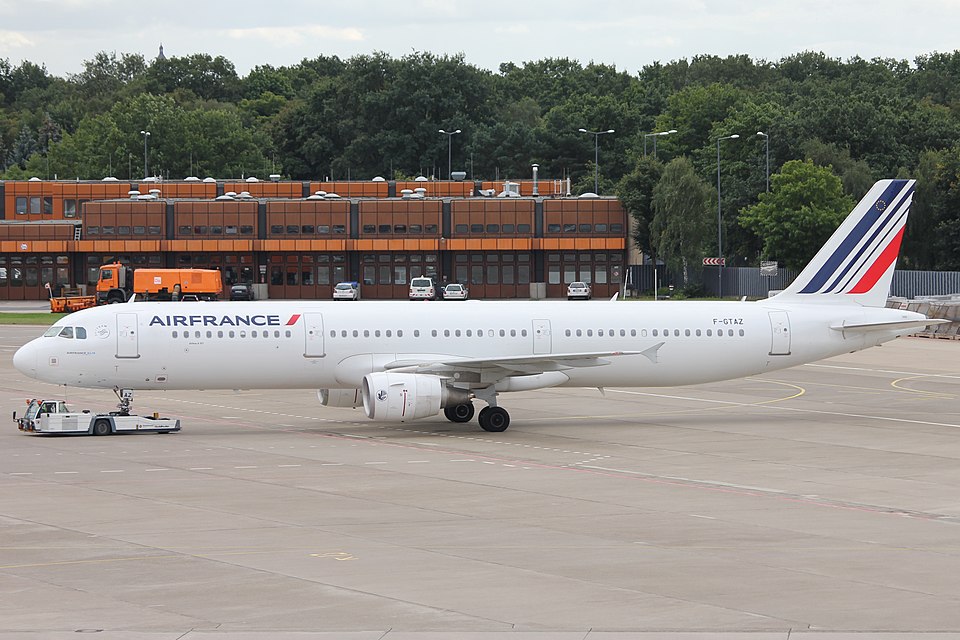
Incident Summary
On 28 April 2015, an incident occurred at Barcelona-El Prat Airport (Spain) involving an Airbus A321-212, registration F-GTAZ, operated by Air France (flight AFR1449), and a Boeing 737-400, registration OE-IAP, operated by TNT Airways. The incident took place at 06:58 local time.
Flight History
The Airbus A321, carrying 196 persons (no injuries), began taxiing from parking stand 221 at 06:45 local time, en route to runway 25L threshold. During taxi, the aircraft was cleared by air traffic control to cross runway 02. At that same time, the Boeing 737, with 2 persons on board (no injuries), was on final approach to the airport. The airport was operating under its nighttime configuration (ENR), which designates runway 07R for takeoffs and runway 02 for landings; the daytime configuration had not yet been activated.
Aircraft Information
The Airbus A321-212 (F-GTAZ) was operated by Air France on a scheduled international passenger flight. The Boeing 737-400 (OE-IAP) was operated by TNT Airways on a scheduled international cargo flight. No injuries were reported on either aircraft.
Airport Configuration
At the time of the incident, Barcelona-El Prat Airport was in its nighttime configuration (ENR), using runway 07R for departures and runway 02 for arrivals. The transition to the daytime configuration had not yet occurred.
Outcome
No collision occurred, and no injuries or damage were reported. The incident was classified as a runway incursion and investigated by the Spanish Civil Aviation Accident and Incident Investigation Commission (CIAIAC).