Paraglider Crash in Puente Alto Injures Pilot and Passenger
A SkyWalk Join't 3 paraglider crashed into the ground near Las Vizcachas, Chile, on September 1, 2024. The pilot and passenger sustained serious spinal…
On November 24, 2024, a BOEING B-767-300 (registration C-FPIJ) operated by Aviación Comercial was involved in an aviation accident near Aeropuerto Ministro Pistarini -Ezeiza (Saez) (Buenos Aires), AR. This summary draws on records from the Argentine Transportation Safety Board (JST); 8 related events involving the same aircraft type or operator are linked below.
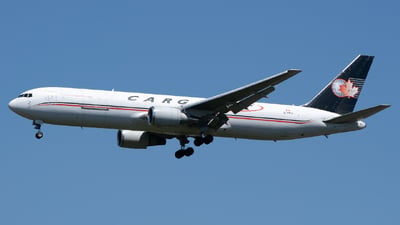
On 24 Nov 2024, a Boeing 767-333 (C-FPIJ) encountered moderate-to-severe turbulence, icing, hail, and lightning while descending near Junín, Argentina. The aircraft landed safely with minor damage.
On 24 Nov 2024, a Boeing 767-333 (C-FPIJ) encountered moderate-to-severe turbulence, icing, hail, and lightning while descending near Junín, Argentina. The aircraft landed safely with minor damage.
The accident on 24 Nov 2024 involved a BOEING B-767-300, registration C-FPIJ, operated by Aviación Comercial, at Aeropuerto Ministro Pistarini -Ezeiza (Saez) (Buenos Aires), AR.
A SkyWalk Join't 3 paraglider crashed into the ground near Las Vizcachas, Chile, on September 1, 2024. The pilot and passenger sustained serious spinal…
A Cessna 172N struck electrical cables while on final approach to land at Aucó Aerodrome in Chile. The pilot was uninjured, but the aircraft sustained damage…
A Bombardier DHC-8-402 suffered a tail strike during landing at Puerto Williams on September 9, 2024. All 76 occupants were unharmed, but the aircraft…
A MYD JS-MD 3 glider veered off the runway and struck a wall at Vitacura Aerodrome on January 6, 2025. The pilot was uninjured, but the aircraft sustained…
A recreational paraglider flight in Puchuncaví, Chile, ended with the pilot sustaining serious injuries after a rapid descent and impact with a hillside on…
A Tecnam P2006T landed on its belly at an aerodrome in Poland after the crew failed to confirm landing gear deployment. The incident resulted in no injuries…