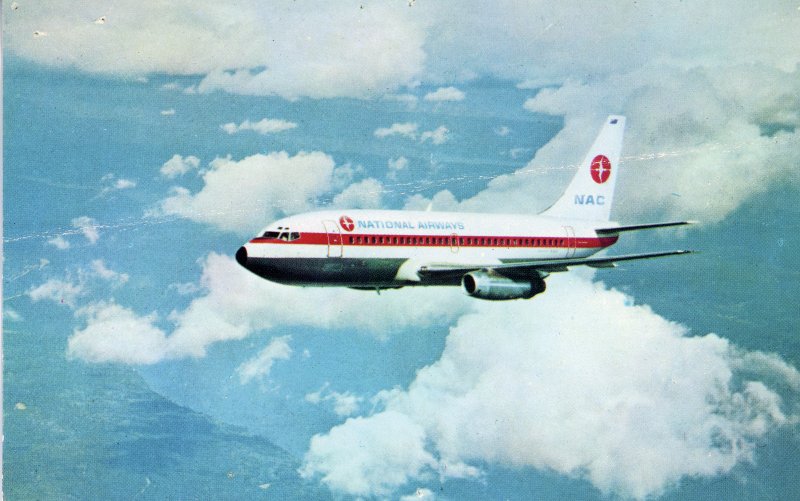
Hydraulic Failure Leads to Runway Excursion of Sriwijaya Air Boeing 737

Casualties unknown • Sultan Mahmud Badaruddin II Airport, Palembang, ID

A Boeing 737-200 experienced total hydraulic system failure during flight, resulting in a runway overrun at Palembang Airport.

What happened

On 24 December 2011, a Boeing 737-200, registration PK-CJD, operated by PT. Sriwijaya Air, was performing a scheduled passenger flight from Pekanbaru to Jakarta. Shortly after departing Pekanbaru, the crew noticed a drop in hydraulic System A quantity. As the aircraft climbed to 5,000 feet, System A was lost entirely. Upon reaching 25,000 feet, the crew observed a decrease in hydraulic System B quantity, which caused the autopilot to disengage.

The pilot decided to divert to Sultan Mahmud Badarudin II Airport in Palembang. To manage the aircraft's weight for landing, the crew performed four holding patterns. During the landing roll at Palembang, the crew experienced initial deceleration from braking, but once the aircraft reached approximately 60 knots, deceleration ceased despite the application of thrust reversers. The aircraft eventually overran the stopway of runway 11, coming to a halt approximately 20 meters past the runway end. There were no injuries among the 134 people on board.

The investigation

The investigation focused on the sudden loss of hydraulic pressure and the subsequent loss of braking effectiveness. Investigators examined the aircraft's hydraulic systems, flight recorders, and maintenance history. A critical component of the inquiry involved a detailed analysis of a hydraulic hose located at the right main landing gear up-lock actuator.

Technical examinations of the wreckage and components revealed that while the standby hydraulic system remained functional and sufficient to support certain flight controls, the primary systems had been compromised. The investigation also looked into the condition of the Main Rudder Power Control Unit (PCU) and the Electro-Hydraulic Servo Valve (EHSV) to determine the cause of the System B depletion.

Findings

  • The primary cause of the hydraulic fluid loss was a defective hydraulic hose at the right main landing gear actuator lock port.
  • The failure of the hose was attributed to a fatigue-induced burst, likely initiated by fretting damage on the wire mesh caused by vibration.
  • The loss of hydraulic System A, followed by the depletion of System B, was likely caused by an excessive internal leak within the Main Rudder PCU, stemming from a defective EHSV.
  • Although the hydraulic failure was severe, the aircraft's braking and reverser systems remained partially effective at low speeds (up to 60 knots), which prevented a more severe outcome.

Safety action

Following the incident, PT. Sriwijaya Air implemented several internal safety measures, including enhanced training in Crew Resource Management (CRM) and Standard Operating Procedures (SOPs) for non-normal checklists. The NTSC issued recommendations to the airline to perform regular hydraulic leak inspections and operational tests of the Main Rudder PCU. Additionally, the NTSC recommended that the Directorate General of Civil Aviation (DGCA) provide oversight to ensure these maintenance and inspection improvements are implemented across similar aircraft types.

Probable cause

The incident was caused by a hydraulic hose failure due to fatigue and vibration-induced fretting, compounded by an internal leak in the Main Rudder PCU.

All Boeing 737-800 accidents →

Frequently asked questions

What happened in the 2011-12-24 Boeing 737-200 accident near Sultan Mahmud Badaruddin II Airport, Palembang, ID?

A Boeing 737-200 experienced total hydraulic system failure during flight, resulting in a runway overrun at Palembang Airport.

What aircraft was involved and where did it happen?

The accident on 2011-12-24 involved a Boeing 737-200, registration PK-CJD, operated by Sriwijaya Air, at Sultan Mahmud Badaruddin II Airport, Palembang, ID.

What was the probable cause of the accident?

The incident was caused by a hydraulic hose failure due to fatigue and vibration-induced fretting, compounded by an internal leak in the Main Rudder PCU.

Loading the flight search…