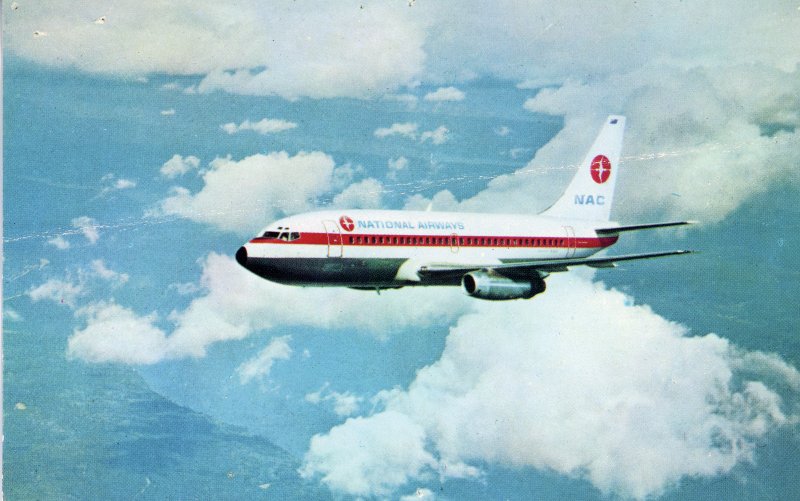
High-speed taxi error leads to nose wheel skid at Minangkabau International Airport

Casualties unknown • Minangkabau International Airport, Padang, ID

A Boeing 737-500 experienced a nose wheel skid on the runway after the pilot performed a high-speed turn, following an earlier near-collision with an aerobridge.

What happened

On 27 March 2013, a Boeing 737-500, registration PK-CLJ, operated by PT. Sriwijaya Air, was involved in a serious incident at Minangkabau International Airport. The flight was part of a scheduled service from Medan to Jakarta, with a stopover in Padang.

The incident unfolded in two stages. Upon arriving from Medan, the aircraft taxied toward its parking stand at an unusually high speed, recorded at 18 knots. The pilot failed to stop at the designated marking, resulting in the aircraft stopping four meters past the line, bringing the left wing dangerously close to an aerobridge. Although the marshaller signaled for the aircraft to stop, the movement continued before the crew eventually repositioned the plane.

Later, while preparing for departure on runway 15, the crew received clearance to taxi and back-track. While attempting to turn the aircraft toward the runway centerline, the pilot executed a turn at 21 knots. This speed exceeded the recommended 5 to 10 knots specified in the Flight Crew Training Manual. Consequently, the nose wheel skidded across the runway, leaving 22 meters of rubber marks on the surface before the aircraft came to a halt with the nose wheel out of position.

The investigation

The investigation conducted by the NTSC focused on the pilot's performance and the aircraft's movement data. Flight Data Recorder (FDR) analysis confirmed that the taxi speeds during both the arrival and the subsequent departure turn were significantly higher than standard operating procedures allow.

Investigators also examined the physical state of the pilot in command (PIC). It was noted that the PIC had reported experiencing stomach pains prior to the flight and had required multiple restroom breaks during the first leg of the journey. Furthermore, the investigation looked into the lack of hazard reporting by both the airline and airport staff regarding the initial near-miss with the aerobridge.

Findings

  • The primary cause of the nose wheel skid was the excessive taxi speed during the turn, which exceeded the recommended limits and prevented the aircraft from following the intended path.
  • The pilot in command demonstrated a lack of situational awareness, evidenced by the failure to recognize the marshaller's stop signal during arrival and the inability to maintain appropriate maneuvering speeds during departure.
  • The aircraft was found to be in an airworthy condition with no mechanical malfunctions or discrepancies reported in the maintenance logs.
  • There was a failure in the implementation of the Safety Management System (SMS), as no hazard reports were filed regarding the initial overshot of the parking stand.

Safety action

Following the incident, PT. Sriwijaya Air implemented several corrective measures, including enhanced line checks and a requirement for pilots to declare their physical and mental readiness during preflight briefings. The NTSC issued recommendations to the airline, the airport operator, and the Directorate General of Civil Aviation to ensure more robust implementation of Safety Management Systems and to encourage the reporting of all hazardous events.

Probable cause

The incident was caused by the pilot's failure to maintain recommended ground maneuvering speeds and a lack of situational awareness, compounded by the pilot's physical discomfort.

All Boeing 737-500 accidents →

Frequently asked questions

What happened in the 2013-03-27 Boeing 737-500 accident near Minangkabau International Airport, Padang, ID?

A Boeing 737-500 experienced a nose wheel skid on the runway after the pilot performed a high-speed turn, following an earlier near-collision with an aerobridge.

What aircraft was involved and where did it happen?

The accident on 2013-03-27 involved a Boeing 737-500, registration PK-CLJ, operated by Sriwijaya Air, at Minangkabau International Airport, Padang, ID.

What was the probable cause of the accident?

The incident was caused by the pilot's failure to maintain recommended ground maneuvering speeds and a lack of situational awareness, compounded by the pilot's physical discomfort.

Loading the flight search…

What you can do on Flight Finder

  • Search flights between any two airports with live fares.
  • By aircraft — pick a plane model (e.g. Boeing 787, Airbus A350) and see every route it flies from your origin.
  • Route map — click any airport worldwide to explore its destinations, or draw a radius to find nearby airports.
  • Global aviation safety — aviation accident database, 40,000+ records since 1980, with map and rankings by aircraft and operator.
  • NTSB safety feed — recent U.S. aviation accidents and incidents from the official NTSB CAROL database, updated daily.