Flight History
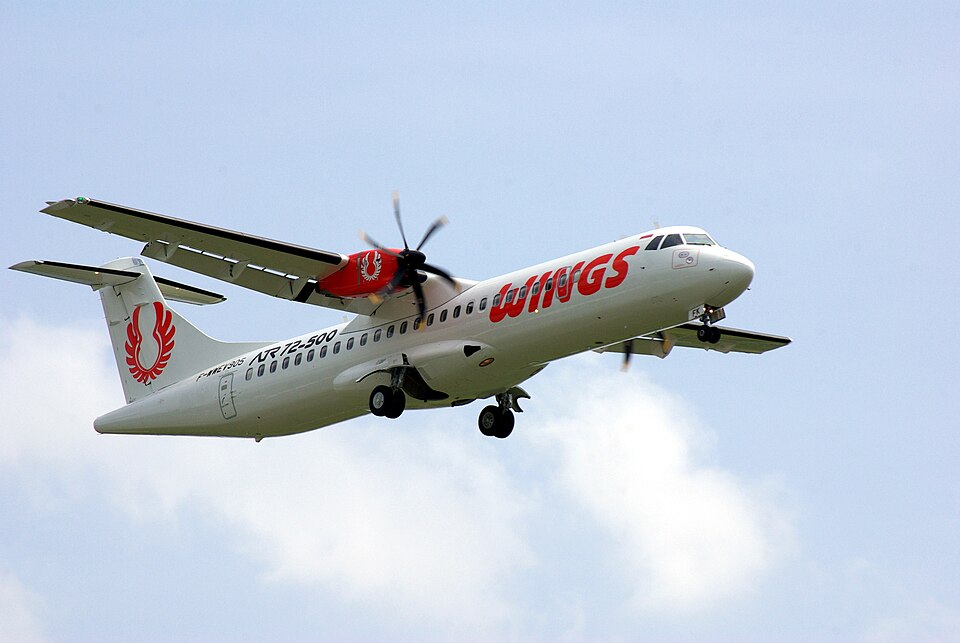
On 17 July 2012, an ATR 72-212A (500 version) registered PK-WFK was operated by PT. Wings Abadi Airlines as scheduled passenger flight WON-1843 from Juanda International Airport, Surabaya, to Adisutjipto International Airport, Yogyakarta. The aircraft carried two pilots, two flight attendants, and 59 passengers. It was the second flight of the day. The aircraft departed Juanda at 0020 UTC (0720 LT) and landed at Adisutjipto at 0115 UTC (0815 LT) after holding for approximately 20 minutes due to traffic. The flight from departure to landing was uneventful.
Fire Sequence
After landing, the aircraft parked at 0117 UTC (0817 LT). The flight crew shut down the left engine and kept the right engine running with the propeller brake engaged to stop propeller rotation. The pilot instructed the flight attendant to open the door. Seconds later, the NAC 2 OVHT (Engine Nacelle Overheat) warning illuminated on the Centralized Crew Alerting System (CCAS) along with an aural warning. The pilot cancelled the warning, and it extinguished. Shortly after, a person outside the aircraft shouted for a fire extinguisher. The NAC 2 OVHT warning reappeared, followed by a right engine fire warning. The pilot pulled the right engine fire handle and discharged extinguisher agent from bottle number 1. After 30 seconds, the fire warning remained illuminated, so the pilot discharged bottle number 2. The fire warning then extinguished.
Damage
There was no evidence of aircraft damage. The right engine lower cowl exhibited soot consistent with exposure to fire.
Investigation Findings
The Komite Nasional Keselamatan Transportasi (KNKT) determined that the fire initiated from a significant amount of accumulated fuel on the engine nacelle floor. The fuel evaporated and reached an auto-ignited condition due to the high temperature inside the right engine nacelle.
Safety Action
The aircraft operator updated the Engineering Authorization to incorporate the use of special tools as required by the manufacturer. The KNKT considered this safety action sufficient to prevent similar occurrences and issued no safety recommendations.