Background
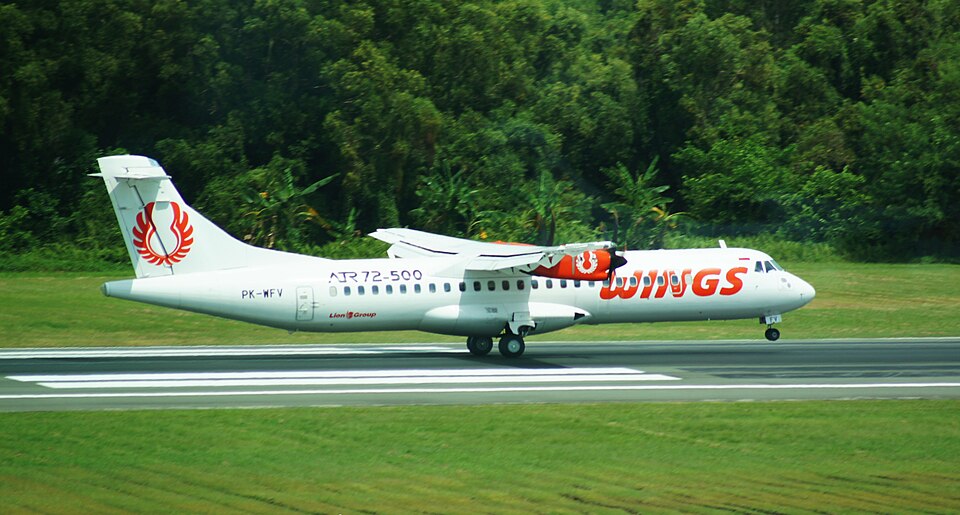
On 18 September 2013, a scheduled passenger flight operated by PT. Wings Abadi Airline using an ATR 72-212A (500 version), registration PK-WFV, was descending towards Sultan Hasanuddin International Airport in Makassar, Indonesia.
Occurrence
During the descent from approximately 12,000 feet, the aircraft experienced an in-flight vibration. After landing and parking, damage was observed on the right engine propeller and engine mountings. The propeller counterweight was not in the proper position. Inspection revealed a broken trunnion pin on propeller blade number 5 and additional crack indications on the trunnion pin of propeller blade number 2. One of both aft lateral engine mountings on the right engine was also found damaged.
Investigation Findings
The Komite Nasional Keselamatan Transportasi (KNKT) conducted the investigation. Examination of the propeller showed crack initiation on the trunnion pin of blade number 5. The forward yoke plate was bent, and wear marks were found on the aft yoke plates. A bolt on the trunnion pin of propeller blade number 2 was broken. The Scanning Electron Microscope (SEM) analysis identified fatigue features on the fracture surfaces. The investigation also examined the propeller blade angle change mechanism, the AC Wild system, and the flight data recorder data, which showed the vibration event starting during descent.
Conclusions
The final report identified findings related to the failure of the trunnion pin and the resulting vibration, but no probable cause was explicitly stated as contributing factors were not detailed in the available source.