Incident Overview
On 21 November 2017, a Cessna 172S aircraft registered PK-BYK, operated by Balai Pendidikan dan Pelatihan Penerbangan Banyuwangi (BP3B), was conducting a cross-country training flight from Blimbingsari Airport (Banyuwangi) to Sultan Muhammad Kaharuddin Airport (Sumbawa Besar). The flight was under Visual Flight Rules (VFR) along a planned route. On board were two student pilots: Student Pilot 1 (SP1) acting as Pilot Flying (PF) and Student Pilot 2 (SP2) as Pilot Monitoring (PM). The aircraft departed at 07:01 local time (00:01 UTC) in daylight conditions with an intended cruising altitude of 7,000 feet. After departure, control was transferred to Bali Approach controller, who provided radar service.
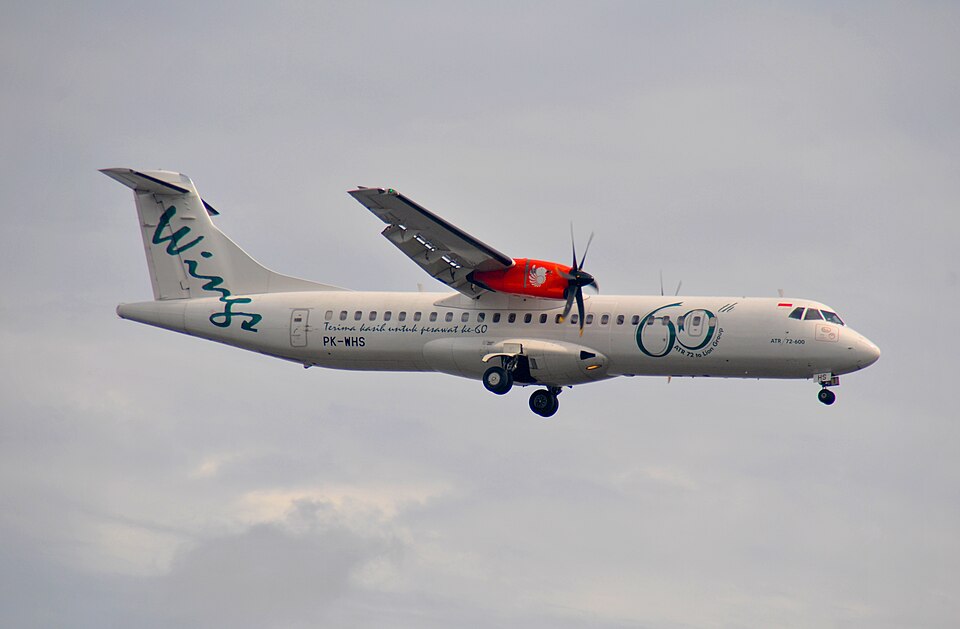
At the same time, an ATR 72-600 aircraft registered PK-WHS, operated by PT. Wings Abadi Airlines (Wings Air) as flight WON1861, was on a scheduled passenger flight from Sumbawa to Lombok International Airport. The aircraft carried two pilots, two flight attendants, and 62 passengers. The Pilot in Command acted as Pilot Monitoring and the Second in Command as Pilot Flying. The flight departed Sumbawa with a cruising altitude of 8,000 feet.
Sequence of Events
At 00:09 UTC, the PK-BYK PM contacted Bali Approach. Prior to reaching point KUBU TAMBAHAN, the PK-BYK pilot requested and received approval to climb to 9,000 feet. As PK-BYK approached NAMP ISLAND, the PF observed an ATR 72-600 aircraft emerging from clouds in the opposite direction, with the aircraft's nose slightly up. The PF assumed the ATR 72 was climbing and decided to descend to avoid it. At 01:31:40 UTC, when PK-BYK left 9,000 feet, the lateral distance between the two aircraft was 4.7 nautical miles and decreasing. The separation reduced below the prescribed minima.
Both flights continued to their destinations without further incident. The aircraft sustained no damage, and no injuries were reported.
Investigation Findings
No issues were identified with aircraft systems or radio communication serviceability. The investigation concluded that the contributing factor was the PK-BYK pilot's assumption that the ATR 72 was climbing and lack of awareness of right-of-way rules, which led to the decision to descend for traffic avoidance.
Corrective actions were taken by AirNav Indonesia and BP3B in response to safety recommendations from the preliminary report. The KNKT acknowledged these actions and issued no further safety recommendations.