Flight History
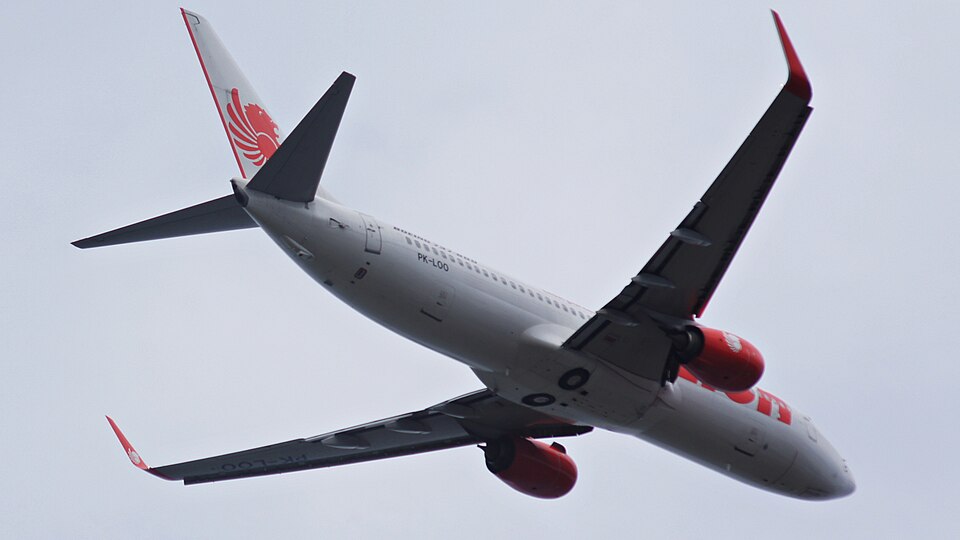
On 29 April 2018, a Boeing 737-800 registered PK-LOO operated by PT. Lion Mentari Airlines (Lion Air) as scheduled passenger flight LNI 892 from Sultan Hasanuddin International Airport, Makassar, to Djalaluddin Airport, Gorontalo. The Pilot in Command (PIC) acted as Pilot Monitoring (PM), and the Second in Command (SIC) acted as Pilot Flying (PF).
The pilots conducted an instrument approach to runway 27. Heavy rain was present on the final approach and over the airport area. A pilot of an ATR aircraft that had previously landed informed the LNI 892 pilot that they experienced heavy rain on the final approach.
At 1040 UTC, the aircraft touched down. The spoilers automatically deployed, and the PF selected the engine thrust reversers. The pilots reported that the rain suddenly became very heavy, and they could only see the runway lights on the left side of the runway. The aircraft came to a stop on the left side runway shoulder approximately 1,200 meters from the beginning of runway 27, on a heading of 310 degrees. The nose landing gear collapsed.
Injuries and Damage
No one was injured in the accident. The aircraft sustained substantial damage, including the collapsed nose landing gear and damage to the right engine cowling.
Weather Conditions
Satellite weather images at 1015 UTC, 1022 UTC, and 1030 UTC showed convective activity in the area. The pilots reported heavy rain on final and at the airport.
Post-Accident Actions
After the aircraft stopped and the crew completed the Emergency on Ground procedure, the radio communication and passenger address system became unserviceable. The PIC commanded evacuation directly to the forward flight attendant (FA 1). FA 1 and FA 4 opened the front doors and initiated evacuation. FA 2, FA 3, and FA 5 did not initially notice that passenger evacuation had been initiated.
The Djalaluddin Tower controller could not communicate with the pilot but was aware the aircraft experienced an abnormality. The controller notified the Airport Rescue and Fire Fighting (ARFF) via handheld radio, as the crash bell had not been connected to the new location of the ARFF station. ARFF personnel received the notification and proceeded to the aircraft to assist evacuation.
Investigation Status
The Komite Nasional Keselamatan Transportasi (KNKT) is conducting the investigation. As this is a preliminary report, no analysis or conclusions are included. The investigation is ongoing, with an expected completion within 12 months of the occurrence. The KNKT issued safety recommendations to the Djalaluddin Airport operator to address identified safety issues.