Summary
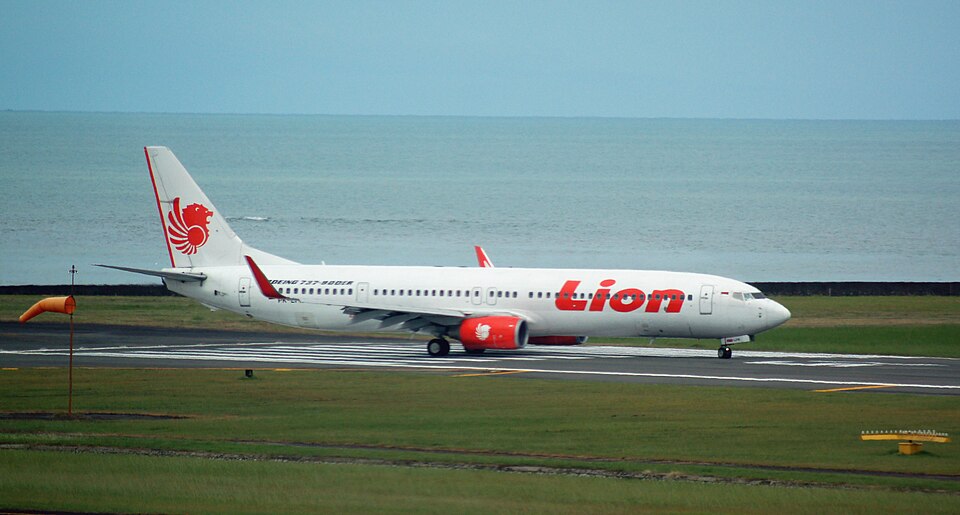
On 1 April 2018, a Boeing 737-900 ER aircraft, registration PK-LFK, operated by PT. Lion Mentari Airlines (Lion Air) as flight LNI600, experienced a pressurization issue during climb from Jakarta to Jambi, Indonesia. The aircraft diverted to Palembang and landed safely. No injuries were reported and no damage to the aircraft occurred.
Flight History
Prior to the flight, the Aircraft Flight Maintenance Log recorded a problem from the previous day: during descent, the cabin rate of descent was difficult to control. The problem could not be resolved, and the engineer issued a Deferred Maintenance Item (DMI) for a single Cabin Pressure Controller (CPC) operation, which was permitted under the Minimum Equipment List (MEL).
Before departure, the engineer informed the Pilot in Command (PIC) of the malfunction and stated that maintenance actions per the Dispatch Deviations Guide (DDG) had been completed. The pilots were reminded to conduct the operational actions specified in the DDG. During the pre-flight check, the pilots began these actions but were interrupted by a ground staff member who reminded the PIC that the flight was behind schedule. The PIC then initiated passenger boarding.
At 0609 local time (31 March 2018, 2309 UTC), the aircraft departed from Soekarno Hatta International Airport, Jakarta, with 213 persons on board: two pilots, five flight attendants, and 206 passengers. The PIC acted as Pilot Flying (PF) and the Second in Command (SIC) as Pilot Monitoring (PM). The flight was the first of the day for the crew and aircraft.
During climb, passing 8,000 feet, the pilot noticed the cabin vertical speed climbing excessively. Checking the pressurization control panel, the pilot found the cabin pressure control selector in the manual position. The pilot then manually selected the outflow valve selector to open. Passing about 10,000 feet, the cabin altitude aural warning activated and the cabin altitude warning light illuminated. The pilot maintained altitude at 10,000 feet for a while, pressed the ALT HORN CUTOUT button, and the aural warning stopped.
At 0620 local time, the aircraft continued climbing to 18,000 feet. Two minutes later, Flight Attendant 1 reported that passenger oxygen masks had dropped. The pilot contacted Jakarta Lower North Control, requesting a diversion to Palembang due to a pressurization problem. The controller acknowledged and instructed the crew to maintain 15,000 feet and proceed direct to Palembang.
At 0703 local time, the aircraft landed on runway 29 at Sultan Mahmud Badaruddin II Airport, Palembang, and taxied normally to the parking stand. After parking, the pilots observed a cabin differential pressure of 5.8 psi and a negative cabin altitude indication. The PIC discussed the situation with a ground engineer, who suggested manually opening the outflow valve. After doing so, the cabin altitude and differential pressure indicated zero, and the passenger door could be opened normally.
Aircraft Information
The aircraft was a Boeing 737-900 ER, registration PK-LFK, operated by Lion Air. It had a deferred maintenance item for a single Cabin Pressure Controller (CPC) operation, as recorded in the Aircraft Flight Maintenance Log.
Personnel Information
The Pilot in Command (PIC) and Second in Command (SIC) were the flight crew. The PIC acted as Pilot Flying (PF) and the SIC as Pilot Monitoring (PM). The crew comprised two pilots, five flight attendants, and 206 passengers.
Safety Actions
Prior to the release of this preliminary report, the Komite Nasional Keselamatan Transportasi (KNKT) was informed of safety actions taken by Lion Air in response to this occurrence. The investigation is ongoing.