Introduction
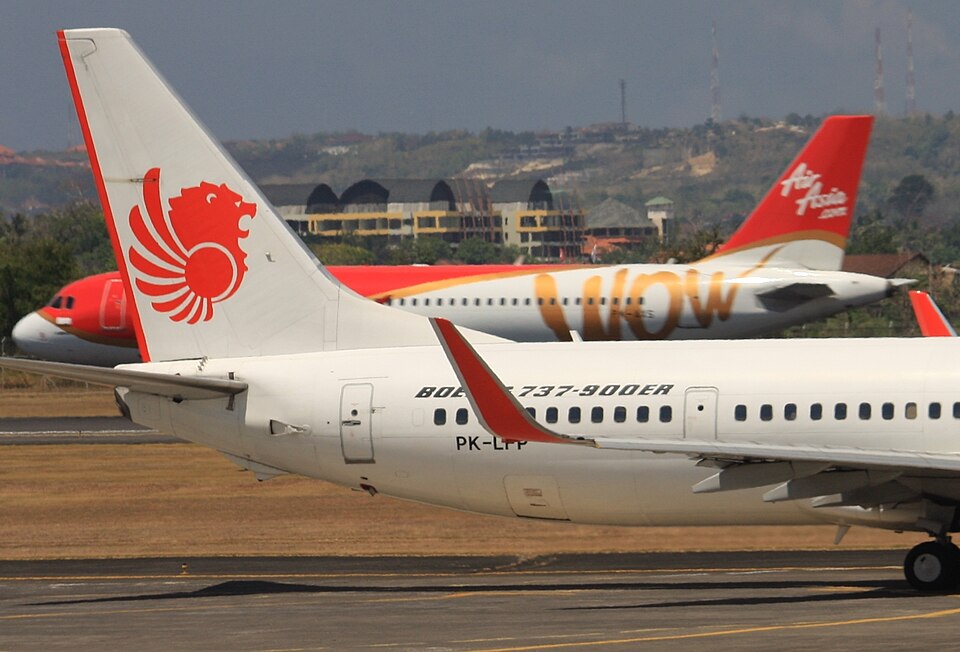
On 6 January 2018, a serious incident occurred involving a Batik Air Indonesia Airbus A320-200, registration PK-LUI, and a Lion Mentari Airlines Boeing 737-900ER, registration PK-LPF, near waypoint TIRUS east of Surabaya, Indonesia. Both aircraft were operating scheduled passenger flights.
History of the Flight
The Lion Air flight, LNI3795, departed Sentani International Airport, Papua, en route to Juanda International Airport, Surabaya. The Batik Air flight, BTK6137, departed Sultan Hasanuddin International Airport, Makassar, also bound for Surabaya. For the Batik Air crew, this was the second flight of the day and the last of the trip. Prior to departure, no malfunctions were reported on either aircraft, and the flights were uneventful until the approach phase.
Air Traffic Control
Both aircraft entered Surabaya East Terminal Control Area (TMA East), which provided air traffic services using radar surveillance. The controller instructed both pilots to join a holding pattern over waypoint TIRUS for landing sequencing and issued step descent clearances.
At 0316 UTC (1016 LT), the controller instructed the Lion Air pilot to descend to 10,000 feet. One minute later, when the Lion Air aircraft had passed 10,300 feet, the controller instructed the Batik Air pilot to descend to 11,000 feet. Both pilots correctly read back the instructions.
Loss of Separation
At 10:20:15 LT, the Batik Air aircraft passed through 11,000 feet while the Lion Air aircraft was maintaining 10,000 feet. The Short-Term Conflict Alert (STCA) on the controller’s radar system activated with aural and visual alerts. The closest lateral distance between the aircraft was approximately 1.9 nautical miles, with a vertical separation of about 600 feet. Separation was regained after the Traffic Collision Avoidance System (TCAS) Resolution Advisory (RA) activated; the Batik Air pilot followed the RA and the Lion Air pilot descended the aircraft. Horizontal separation returned to the required standard after passing 5 nautical miles.
Investigation Findings
The investigation determined that neither the aircraft nor the radar system had any serviceability issues. The analysis focused on aircraft separation and pilot attention. The study of human performance indicated that the Batik Air pilot was experiencing unrecovered fatigue and personal family issues, which reduced awareness during low cockpit activity and led to a misunderstanding of the assigned altitude.
Contributing Factors
The investigation concluded that the contributing factors to the incident were:
- The vertical separation reduced below the requirement because the target altitude of the Batik Air aircraft was set to 10,000 feet, causing it to pass the assigned altitude of 11,000 feet.
- Unrecovered fatigue and family issues reduced the pilot’s awareness during less cockpit activity, resulting in reduced ability to monitor other traffic and misunderstanding of the assigned altitude.
Safety Actions and Recommendations
The Komite Nasional Keselamatan Transportasi (KNKT) was informed of safety actions taken by Batik Air. While acknowledging these actions, the KNKT identified remaining safety issues and issued recommendations addressed to Batik Air and the Directorate General of Civil Aviation (DGCA).