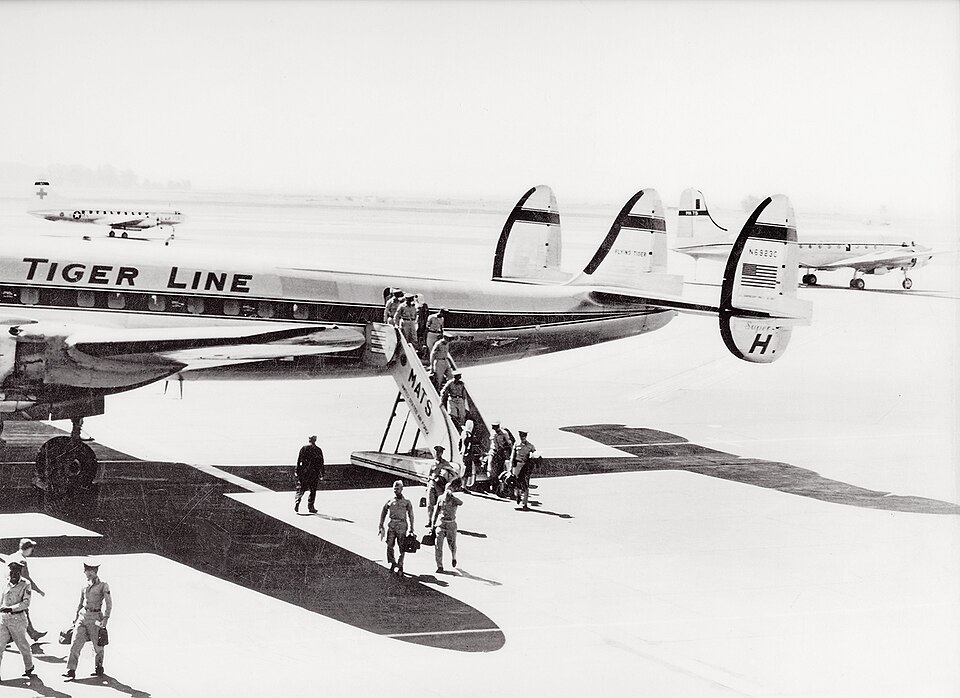
Incident Overview
A Super Constellation operating a Military Air Transport Service (MATS) charter flight departed Gander, Newfoundland, at 17:09 GMT, bound for Frankfurt, Germany. Approximately three hours into the flight, while cruising at Flight Level 210, a fire developed in the No. 3 engine. The crew shut down the engine and feathered its propeller.
Subsequent Engine Failures
Five minutes later, the No. 1 engine oversped after the flight engineer erroneously closed its firewall shut-off valve. The crew was unable to restart the No. 1 engine. The pilots decided to divert to Shannon, Ireland, using maximum except takeoff (METO) power on the No. 4 engine and reduced power on the No. 2 engine. However, the No. 2 engine subsequently lost power and ultimately failed, leaving the aircraft with only one operational engine.
Ditching and Rescue
With only the No. 4 engine providing power, the crew carried out a ditching at sea. During the ditching, the left wing separated from the fuselage, but the fuselage remained intact. The cabin rapidly filled with water, and the aircraft sank nose-first approximately ten minutes later. The Swiss merchant ship Celerina arrived first on scene and rescued 48 wounded individuals. Twenty-eight others, including five crew members, were killed. The aircraft sank and was lost.
Official Findings
The probable cause of the accident was determined to be the failure of two of the aircraft's four engines, and improper action of the flight engineer which disabled a third engine, thereby necessitating a ditching at sea.