Incident Overview
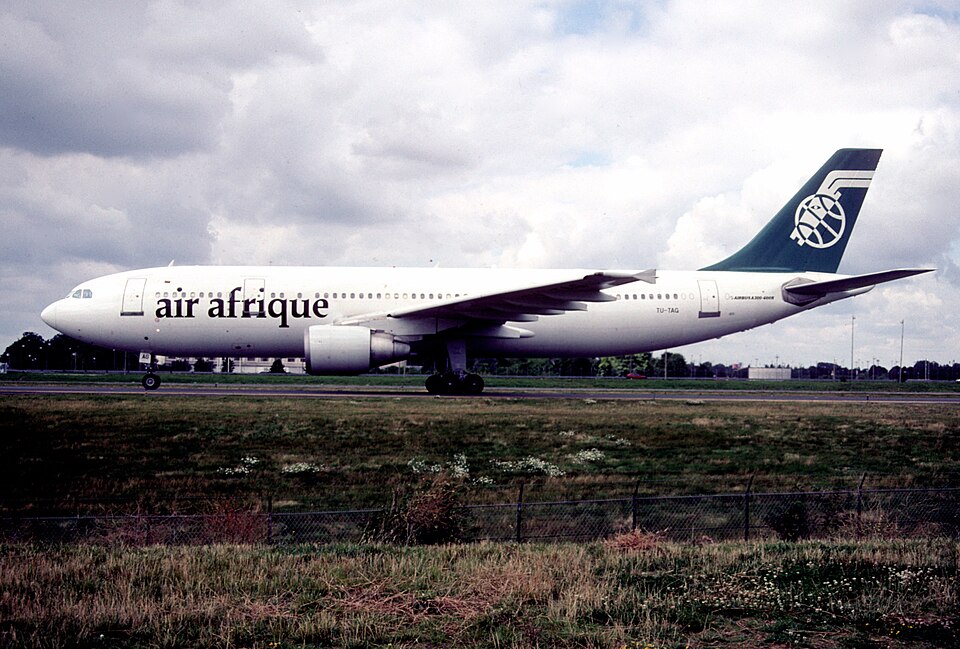
On 13 May 2001, at 0737Z, an Airbus A300-600, registration TU-TAG, was involved in an incident while landing on Runway 03R at Johannesburg International Airport. The aircraft was operating a scheduled international flight from Brazzaville, Gabon. There were 2 pilots, 8 cabin crew, and 77 passengers on board. No injuries or fatalities were reported. The weather was fine.
Sequence of Events
The co-pilot was the pilot-flying for the approach and landing, while the pilot-in-command monitored and handled radio communications. The aircraft was vectored for a landing on Runway 03R. The autopilot was engaged until approximately 550 feet above ground level, after which it was disconnected. The autothrust remained engaged to control speed.
During the landing flare, initial elevator inputs were small but became larger as the aircraft descended closer to the runway surface. The main landing wheels contacted the runway, and the aircraft bounced. During the bounce, the pilot-flying applied a nose-down input, followed by a significant nose-up input, causing a large nose pitch-up. The main landing wheels contacted the runway again, and simultaneously the tail also made contact with the runway surface. After the tail strike, the aircraft bounced again, though less severely than the first bounce.
Aircraft Damage
The fact-sheet does not specify the extent of damage to the aircraft.
Probable Cause
The probable cause was determined to be improper procedures by the pilot-flying while landing, resulting in an excessive nose pitch-up that caused the tailskid to impact the runway surface.