What happened
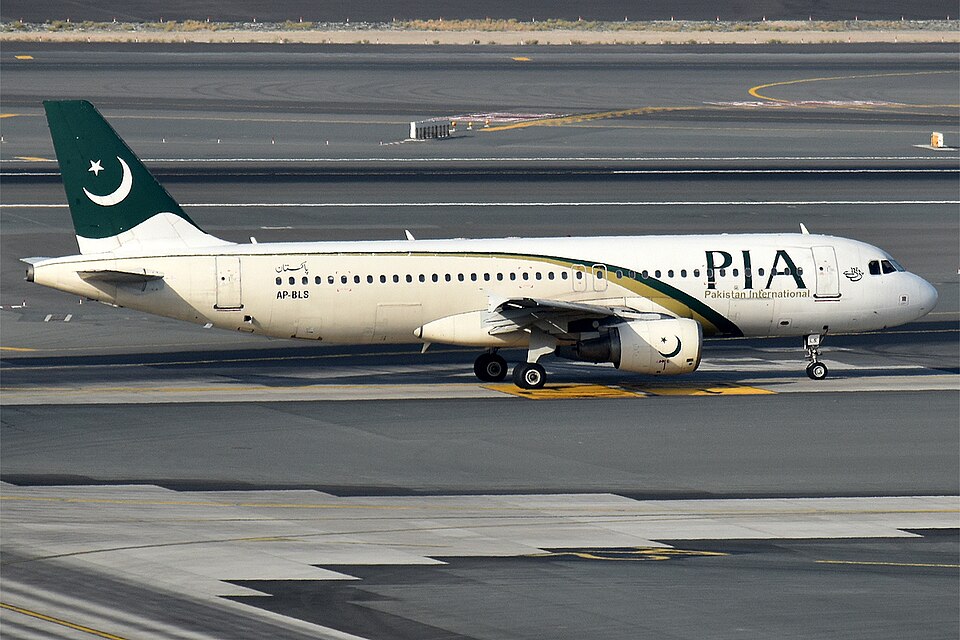
On September 29, 2024, Pakistan International Airlines (PIA) Flight PK-260, an Airbus A320-214 with registration AP-BLS, was operating a scheduled passenger flight from Muscat International Airport (MCT) to Bacha Khan International Airport in Peshawar (PEW). The aircraft carried 76 persons on board.
At approximately 01:14 UTC, while cruising at Flight Level 370 roughly 23 nautical miles south of Panjjur, Baluchistan, the flight crew received Electronic Centralized Aircraft Monitor (ECAM) warnings indicating a fault in both engine bleed systems. This was followed by cabin pressure warnings and an excess cabin altitude alert, signaling a failure in the aircraft's pressurization system.
The crew declared an emergency, changed their transponder code to 7700, and initiated an emergency descent to Flight Level 100. Due to delays in receiving clearance from Air Traffic Control, the crew manually deployed cabin oxygen masks as a precautionary measure. The aircraft successfully diverted and landed safely at Jinnah International Airport (JIAP) in Karachi. There were no injuries to any of the 76 people on board, and no structural damage was reported to the aircraft.
The investigation
The Bureau of Aircraft Safety Investigation Pakistan (BASIP) conducted a final investigation into the incident. The inquiry focused on maintenance records, specifically actions taken on September 28, 2024, prior to the flight. Investigators examined the history of the Left Hand (L/H) Air Conditioning Pack and the Right Hand (R/H) engine bleed system.
The investigation established that the aircraft had an existing defect in the R/H engine bleed system due to the non-availability of a required Pressure Regulating Valve (PRV). This issue had been deferred under the Minimum Equipment List (MEL). On September 28, maintenance personnel performed a leak check on the L/H Air Conditioning Pack. However, the investigation found this check to be deficient.
Furthermore, the maintenance team prematurely removed the L/H pack from Carry Forward (C/F) status without reviewing the full maintenance history or accounting for the existing R/H bleed defect. This error eliminated the system's redundancy, leaving the aircraft with no functional pressurization capability during cruise.
Findings
The primary cause of the occurrence was a deficient leak check performed on the L/H Air Conditioning Pack on September 28, 2024, combined with the premature removal of the pack from C/F status without reviewing the full maintenance history. These maintenance errors were compounded by the pre-existing unresolved R/H engine bleed system defect due to the non-availability of the required Pressure Regulating Valve (PRV).
Contributing factors identified included:
- Organizational Factors: The suspension of the Component Support Program (CSP) and inadequate spare float management led to a prolonged delay in obtaining the PRV. This created a single-system dependency that amplified the consequences of the subsequent L/H bleed deficiency.
- Human Factors: Significant time pressure on the maintenance team during the September 28 visit contributed to the deficient leak check and premature clearance of the pack.
- Quality Assurance: QA processes failed to detect or prevent the premature return to service of an inadequately rectified MEL-deferred component.
- SOP Non-Adherence: Certifying staff did not review the maintenance history of the deferred pack system before clearing the defect, indicating a gap in understanding Standard Operating Procedure requirements for MEL-deferred item rectification.
Safety action
BASIP issued several safety recommendations to PIA Engineering & Maintenance, PIA Quality Assurance Division, and PIA Executive Management:
- OHDS Wing Loop Inspection: PIA was advised to inspect OHDS Wing loop installations on AP-BLS and other A320 family aircraft per Airbus Service Information.
- Re-assessment and Training: PIA QA Division should re-assess certifying staff involved in the maintenance and conduct recurrent training on bleed/pack system duct leak checks. Mandatory ATLB history reviews before removing MEL-deferred defects were required.
- MEL Dual Deferral Risk Assessment: PIA was recommended to implement a procedure for risk assessment when two or more interdependent MEL-deferred defects exist.
- Spare Parts Inventory: PIA Management should prioritize reinstating the A320 CSP program and maintain adequate spare floats for safety-critical components.
- Maintenance Time Pressure: PIA was advised to establish policies ensuring adequate time for deferred MEL defect rectification and empowering teams to delay departure if safety standards cannot be met.
- FDR/CVR Data Extraction: BASIP noted the need for standing protocols and software to secure flight data recorder information for future incident investigations.