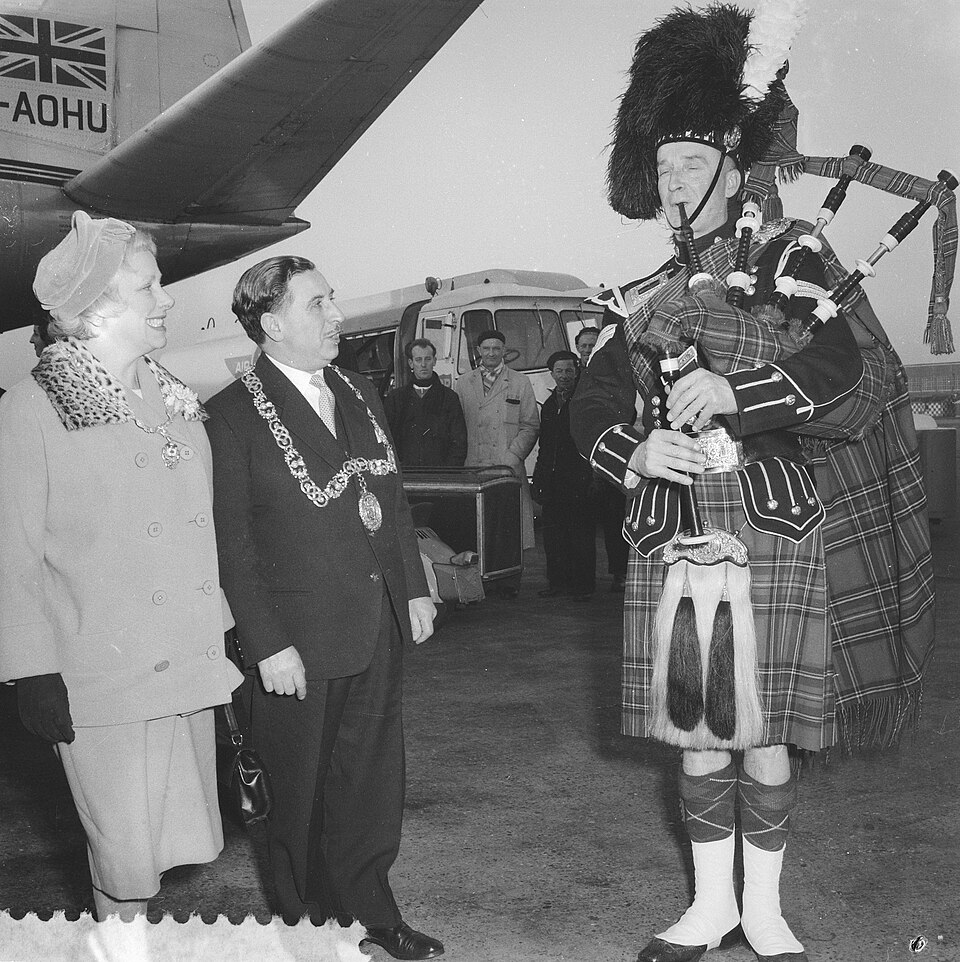
On January 7, 1960, a Vickers Viscount (registration G-AOHU) operated by British European Airways - BEA was involved in an aviation accident near London-Heathrow, United Kingdom during landing or approach. No fatalities were reported. Investigators recorded the probable cause as: The failure of Air Traffic Control to notify the captain of a critical deterioration in runway Visual Range during his final approach. This summary draws on records from the Bureau of Aircraft Accidents Archives (B3A); 8 related events involving the same aircraft type or operator are linked below.
Upon landing, the nose gear collapsed, causing the aircraft to skid 500 yards and erupt in flames. All 59 occupants evacuated safely, but the aircraft was destroyed. The probable cause was ATC's failure to notify the captain of deteriorating runway visual range.
Accident Sequence
The aircraft experienced a collapse of the nose gear upon landing. The airplane then skidded for approximately 500 yards before coming to rest in flames. All 59 occupants were evacuated safely, but the aircraft was destroyed by a post-crash fire.
Probable Cause
The official investigation determined that the probable cause was the failure of Air Traffic Control to notify the captain of a critical deterioration in runway visual range during his final approach. In consequence, he attempted to land in visibility that gave him insufficient visual reference, with the result that the nosewheels contacted the runway before the mainwheels, thereby overstressing the nose wheel unit and fracturing its attachments.