What happened
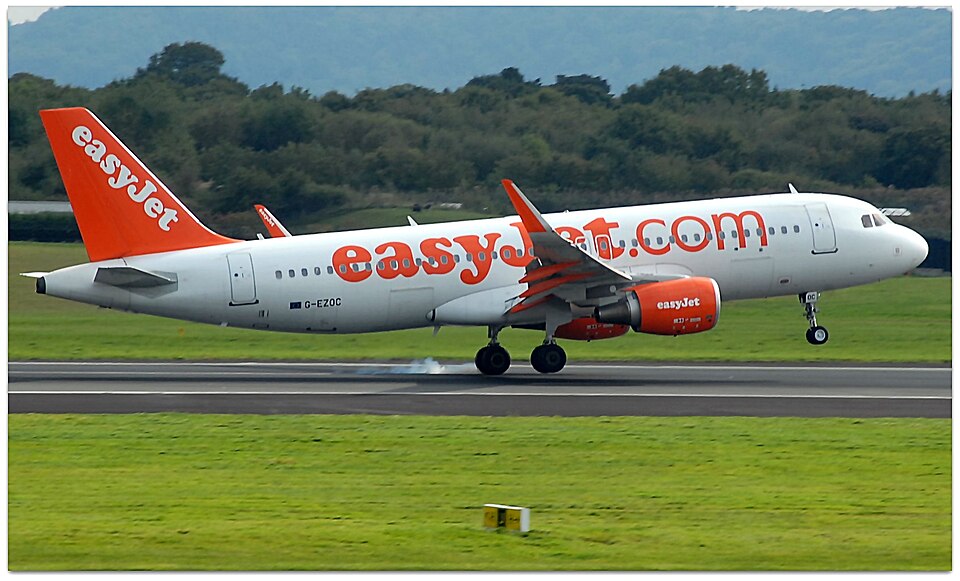
On September 29, 2017, an Airbus A320-214, registration G-EZOC, operated by EasyJet, was performing a scheduled flight from Mykonos International Airport to Milan Malpensa International Airport. While cruising at FL360 in Greek airspace near the XANIS waypoint, the flight crew detected the smell of burning plastic and observed black smoke entering the cockpit from the electronic compartment located beneath the first officer's rudder pedals.
The crew immediately activated the vent extract fault warning light procedures as outlined in the Quick Reference Handbook (QRH). Although these actions reduced the visible smoke, the pungent odor of burning plastic persisted. The pilots declared a MAYDAY and diverted the aircraft to Athens International Airport. During the descent, the crew utilized oxygen masks for protection. The aircraft landed safely at Athens without any injuries to the 186 passengers or 6 crew members on board.
The investigation
The investigation focused on the source of the smoke and the failure of the electrical component. Following the landing, the airport fire department inspected the aircraft, and a certified engineer identified that the smoke originated from a fault within a static inverter located in the avionics bay.
Technical analysis revealed that the capacitor (C306) inside the static inverter had overheated. The investigation also examined why this specific component, which was part of a known group requiring modification, remained installed on an aircraft manufactured after the primary inspection period. It was determined that while the manufacturer had issued technical follow-ups regarding problematic capacitors, the operator's maintenance control system primarily monitored for Operator Information Transmissions (OIT), leading to a gap in identifying components that might be in stock rather than already installed.
Findings
- The primary cause of the incident was the failure of a capacitor (C306) within the static inverter due to overheating.
- The damaged static inverter belonged to a specific group of units identified by a Service Bulletin as requiring modification.
- The operator's Continuing Airworthiness Management Organisation (CAMO) lacked a process for monitoring Technical Follow-Ups (TFU) issued by the manufacturer.
- An earlier inspection intended to locate and remove problematic units was ineffective because it did not account for components that might have been held in stock and subsequently installed on newer aircraft, such as G-EZOC.
- The aircraft manufacturer had provided sufficient information to identify the problematic units, but the evaluation of that information by the operator's engineering department was insufficient.