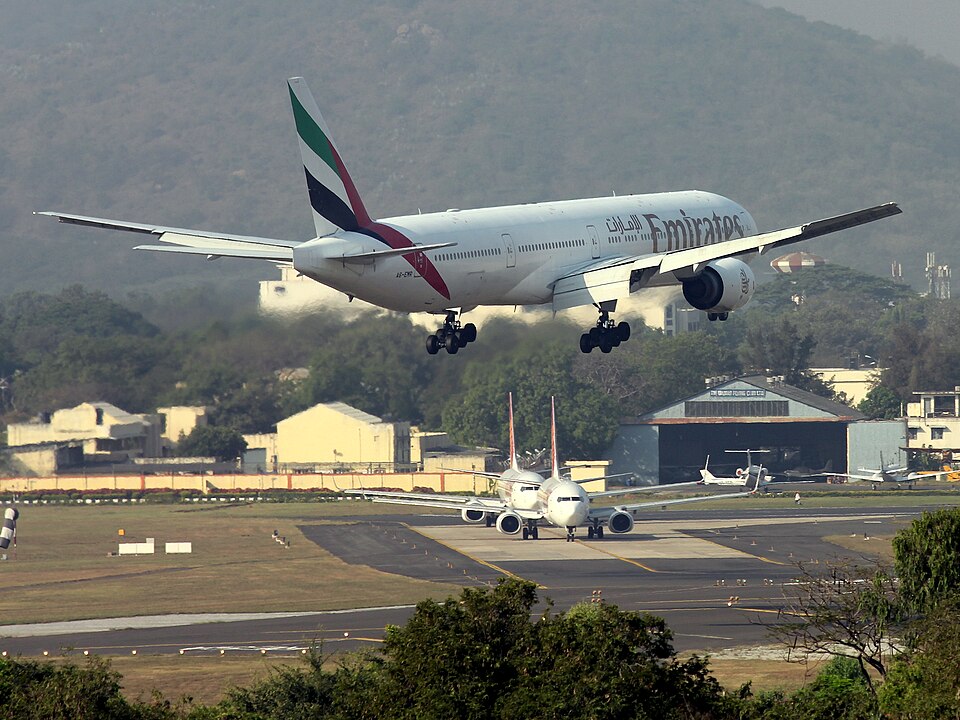
History of the Flight
On 2 December 2011, at 22:35 local time (UTC+5), an Emirates Boeing 777-300, registration A6-EMR, was landing at Ibrahim Nasir International Airport (MLE) in the Maldives. During the landing, a tire burst occurred. The aircraft was operating a scheduled flight.
Damage to Aircraft
The aircraft sustained damage to multiple tires. Examination of the tires revealed the following conditions:
- Tire position 1 exhibited a torn portion, high temperature signature, a flat spot, and broken bead cores. Two small parts were recovered.
- Tire position 2 was broken into four parts, with crown plies torn down, a flat spot, heated areas, and total dislocation.
- Tire position 5 had a 700 mm long flat spot, heated rubber, friction cuts on the sidewall, wrinkles, and a rupture.
Additionally, the landing gear junction boxes were damaged. Analysis of the junction boxes indicated that they had been struck by debris from the burst tires.
Other Damage
The runway surface at MLE sustained damage from the tire debris. The approximate positions of the recovered junction boxes, runway damage, and the landing point were documented.
Meteorological Information
General meteorological conditions at MLE on the night of the incident were reported. Rainfall data showed precipitation before and at the time of the incident.
Personnel Information
The flight crew had accumulated flying time in the 90, 28, 7 days and 24 hours prior to the incident, as recorded in the investigation.
Aircraft Information
The aircraft was a Boeing 777-300, manufactured by Boeing, with UAE nationality and registration A6-EMR. It was operated by Emirates.
Investigation
The investigation was conducted by the Air Accident Investigation Sector of the UAE General Civil Aviation Authority, based on reports from the operator and the tire manufacturer. The objective was to prevent future incidents by identifying safety-related risks. No determination of blame or liability was made.
No injuries to persons were reported. The aircraft was not on fire, and survival aspects were not a factor.