Flight History
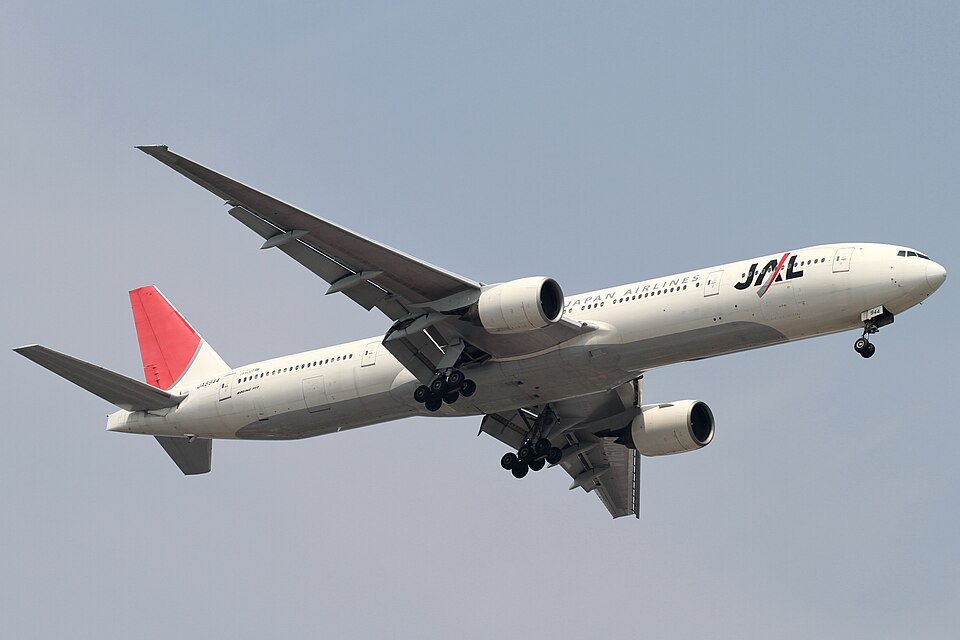
On Sunday, June 24, 2018, Japan Airlines Co., Ltd. flight 514, a Boeing 777-300 registered as JA8944, departed New Chitose Airport at 15:19 JST bound for Tokyo International Airport. The aircraft carried 515 persons on board: 2 pilots, 11 other crew members, and 503 passengers. The pre-flight briefing at around 13:45 included a forecast of vertical wind shear (VWS) at the planned cruising altitude of FL300 and a jet stream at FL370. The flight crew instructed cabin crew to be alert for possible shaking. After takeoff and climb, the seat belt sign was turned off and cabin service began. While cruising at FL300 over Miyagi Prefecture, the cockpit crew temporarily exchanged control roles for landing preparation. Shortly after, the aircraft shook relatively fiercely. About 15 seconds later, a second, fiercer shaking occurred. During this event, a cabin attendant on the aft aisle, who was collecting used cups, attempted to grasp an armrest per operator procedures but was unable to hold on, fell, and felt a floating sensation. The vertical acceleration recorded by the flight data recorder varied from +0.82G to +1.50G, then decreased to 0.31G, and increased again to 1.71G over approximately three seconds. The airborne weather radar showed no echoes. The seat belt sign was off at the time. The first officer immediately illuminated the seat belt sign, and the aircraft descended to FL260, continuing to Tokyo International Airport, landing at 16:34.
Injuries
One cabin attendant sustained a serious injury (bone fracture).
Aircraft Damage
No damage to the aircraft was reported.
Weather Conditions
According to the Asia Pacific Surface Analysis Chart as of 15:00 on June 24, 2018, a cold front extended from a low over the Sea of Okhotsk over northern Japan, and a seasonal rain front was stationary south of Japan. The hourly atmosphere analysis chart for 16:00 showed a jet stream with maximum wind velocity of approximately 150 kt at FL370 and a VWS region of 9–12 kt/1,000 ft near the accident site. No pilot reports of significant turbulence were received in the area between 13:00 and the time of the accident.
Additional Information
The operator's cabin attendant manual stipulates that in the event of shaking, crew should take the nearest vacant seat and fasten a seat belt, or if none is available, hold onto aircraft structures such as seats or assist grips, adopting a low posture to secure safety. Clear air turbulence (CAT) is defined in aviation literature as turbulence occurring in clear or cirrus regions, often near jet streams or fronts, and is not detectable on airborne weather radar. Signs of CAT include rapid wind changes, temperature changes of 1°C or more per minute, fluctuations in digital outside air temperature, Mach number variations at constant power, and control column oscillations.