Summary
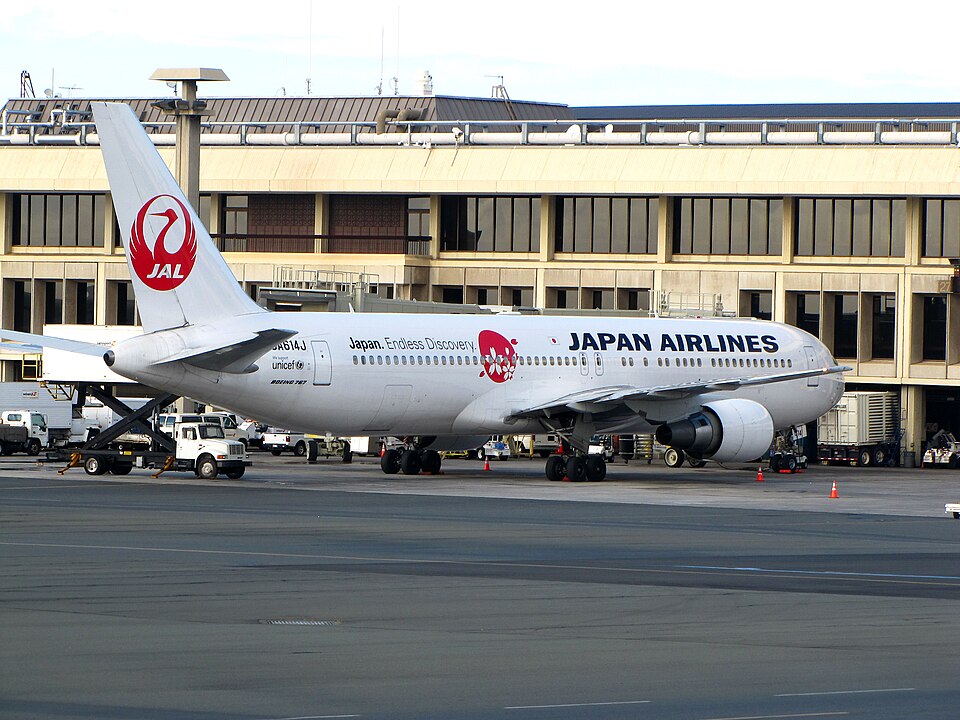
On July 12, 2023, a Japan Airlines Boeing 767-300, registration JA614J, operating as scheduled flight 585 from Tokyo International Airport to Hakodate Airport, experienced a fuel shortage that required urgent measures. After two go-arounds at Hakodate, the flight diverted to New Chitose Airport, declaring an emergency due to low fuel, and landed safely. The incident involved 258 persons on board.
Aircraft and Crew
The aircraft was a Boeing 767-300 operated by Japan Airlines Co., Ltd. The flight crew comprised three pilots: the pilot in command (PIC), a trainee pilot undergoing crew qualification requalification, and a captain-qualified pilot monitoring the trainee. The flight also included eight other crew members and 249 passengers.
Pre-flight and Departure
The crew conducted a pre-flight briefing from 06:10 JST, reviewing weather and aeronautical information. The terminal aerodrome forecast (TAF) for Hakodate Airport, issued at 02:09, indicated visual meteorological conditions at the estimated arrival time of 08:55, despite temporary deterioration earlier. The crew judged that no additional fuel was needed and loaded the planned fuel, with New Chitose Airport as the alternate. The minimum diversion fuel was entered into the flight management system. The aircraft departed Tokyo at 08:00 with the PIC as pilot flying and the trainee as pilot monitoring.
Approach and Go-arounds
During the approach to Hakodate, the crew obtained ATIS information and set up for an ILS Z approach to Runway 12. Due to the trainee being in the right seat, a higher decision altitude was used. At approximately 08:56, the aircraft was cleared to land. When reaching the decision altitude, the PIC could not see the required visual references and executed a go-around at 09:00:57. During the go-around, the PIC briefly sighted the approach lights before climbing.
After the first go-around, air traffic control provided weather information, including runway visual range of 2,000 m or more and a ceiling of 1,200 ft, with scattered clouds at 300 ft and 600 ft. A second approach was attempted but resulted in another go-around for the same reason.
Diversion and Fuel Emergency
Following the second go-around, the crew decided to divert to the alternate airport, New Chitose. During the diversion, the remaining fuel became critically low. The aircraft declared an emergency due to shortage of fuel and landed at New Chitose Airport. The incident was classified as a serious incident under Japanese regulations.
The investigation by the Japan Transport Safety Board included analysis of flight data recorder, ACARS messages, and air traffic control communications.